
 By Culture Expert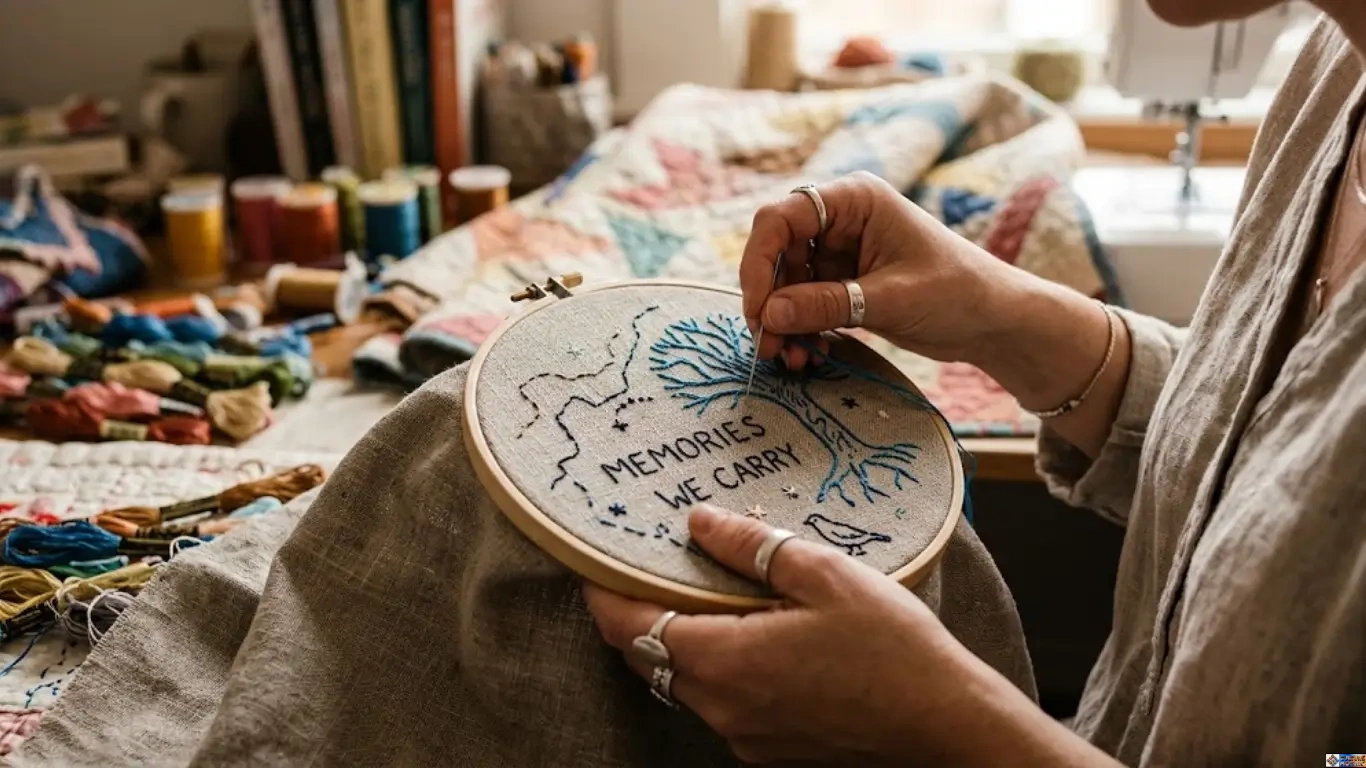
Quick Summary: Artisanal stitch narratives transform raw textiles and threads into tactile records of human experience, cultural identity, and emotional healing. By combining slow crafting techniques like Bengali Kantha and Japanese Sashiko with modern expressive art, stitch artists use needlework to reclaim personal autonomy in a digital world. This comprehensive guide explores the rich history, therapeutic benefits, material selection, and foundational techniques required to craft your own fabric story.
The Lost Art of Fabric Storytelling
In an era dominated by instantaneous digital media and fast-fashion disposal cycles, our connection to physical objects has fractured. We scroll past thousands of images daily, yet few leave a lasting tactile memory. This detachment has created a subtle crisis of identity and sustainability: fast fashion strips clothing of its personal meaning, turning garments into mass-produced waste while erasing the cultural heritages historically woven into every seam.
When we lose touch with how things are made, we lose the stories that ground us.
The antidote to this digital fatigue is the rising movement of Artisanal Stitch Narratives. Far beyond decorative craft, this practice uses hand-stitching as a medium for factual reporting, personal archiving, and structural storytelling. Through Artisanal Stitch Narratives, textile artists use every knot, pulled thread, and fabric choice to map life events, process grief, and preserve generational memory.
By slowing down to stitch, you reclaim your time, transform damaged garments into wearable art, and participate in a global movement toward Artisan-Crafted Sustainable Fashion.
Understanding the Craft: Slow Stitching vs. Traditional Embroidery
To fully appreciate how storytelling through textiles works, it helps to understand how slow-stitched narrative art diverges from conventional decorative needlework. While traditional embroidery often emphasizes uniform patterns, precise replicability, and flawless technique, narrative slow stitching prioritizes emotional expression, personal symbolism, and structural freedom.
| Feature | Traditional Embroidery | Slow Stitching & Narrative Art |
| Primary Goal | Visual symmetry, decorative embellishment | Storytelling, emotional processing, cultural preservation |
| Pattern Source | Stenciled patterns, commercially printed kits | Intuitive design, personal journal entries, organic shapes |
| Technique & Tension | Uniform stitch length, precise execution | Variable stitch length; tension reflects emotional tone |
| Fabric Choices | Standardized cotton Aida, uniform linen | Upcycled heirlooms, repurposed garments, vintage scraps |
| Pacing & Mindset | Result-oriented, focused on perfection | Process-oriented, meditative, accepting of “imperfections” |
Global Heritage Traditions of Narrative Stitching
Long before contemporary artists adopted the needle to make personal statements, ancient cultures were using thread to record history, express resilience, and map their environments. Understanding these foundation methods deepens your own practice as a stitch club textile artist.
                 Global Heritage Stitch Traditions
                                 │
     ┌───────────────────────────┼───────────────────────────┐
     ▼                           ▼                           ▼
Bengali Kantha              Japanese Sashiko           Mexican Otomi
(Family archives,           (Visible mending,          (Vivid mythologies,
 structural re-use)          geometric resilience)      bold native flora)
1. Kantha Embroidery: Archives Layered in Saris
Originating in Bengal (modern-day Bangladesh and West Bengal, India), kantha embroidery was born out of domestic resourcefulness. Women took worn-out cotton saris, layered them together, and joined them using a simple running stitch.
These quilted textiles served as bedcovers, wraps, and baby blankets. More importantly, they acted as visual diaries. Through embroidered motifs of birds, village life, and spiritual symbols, women documented their personal aspirations, family lineages, and local folklore. The cloth itself physically preserved the garment history of mothers, grandmothers, and daughters.
2. Japanese Sashiko: The Beauty of Visible Repair
Developed during the Edo period in rural Japan, Sashiko (meaning “little stabs”) began as a practical necessity for working-class families. Indigo-dyed hemp cloth was precious, and Sashiko allowed garments to be reinforced, patched, and insulated against severe winters.
Over generations, these functional running stitches evolved into geometric motifs—waves, bamboo, and interlocking circles—that carried symbolic protective meanings. Today, Sashiko forms the foundation of the modern visible mending movement, teaching us that wear and damage are not flaws to hide, but chapters of a garment’s story to celebrate. Explore how these techniques tie into What is Heritage Fashion? to understand how history shapes modern apparel.
3. Otomi Embroidery: Myths Captured in Color
Hailing from the Tenango de Doria region in Mexico, Otomi embroidery (or Tenango) uses bold, satin-stitched figures depicting native wildlife, mythological creatures, and regional celebrations. The vibrant threads cover the surface of unbleached cotton, resulting in dense, narrative panels that preserve indigenous folklore against modern cultural homogenization.
The Science and Psychology of Haptic Storytelling
Why does picking up a needle feel so grounding? Research into haptic engagement—the physical sensation of touch—reveals that manual textile manipulation directly affects cognitive and physiological states.
The Mental Health Mechanism
When engaged in narrative needlework, your hands perform rhythmic, repetitive micro-movements. This fine-motor engagement requires just enough working memory to quiet the amygdala—the brain’s fear center—without causing mental exhaustion.
As a result, your brain enters a flow state similar to deep meditation. Unlike digital consumption, which triggers frequent dopamine spikes followed by fatigue, the tactile resistance of cloth and thread supports sustained focus and nervous system regulation. Learn more about tactile psychology through Somatic Textiles.
The Power of Material Provenance
The fabrics you choose carry their own inherent history. Using a scrap from a childhood blanket, a deceased relative’s work shirt, or an old tablecloth connects your piece directly to a specific time and place.
Understanding Geographic Fingerprinting of Heritage Fibers helps stitch artists choose materials that carry authentic cultural and environmental stories. When you stitch onto these surfaces, you are engaging in a physical dialogue with the past.
A Practical Guide: How to Stitch Your Own Story
You do not need formal art training to create compelling Artisanal Stitch Narratives. You only need basic tools and a clear intention.
       1. Base Fabric selection (Linen, Denim, Heavy Cotton)
                                 │
                                 ▼
       2. Palette & Thread Choice (Cotton, Wool, Silk)
                                 │
                                 ▼
       3. Core Techniques (Running Stitch, Backstitch, French Knot)
                                 │
                                 ▼
       4. Lettering & Symbolism (Stem Stitch, Chain Stitch)
What Are the Best Fabrics to Use for a Stitched Narrative?
For beginners and experienced artists alike, natural woven fabrics offer the best stability, needle penetration, and tactile feedback:
- Medium-Weight Linen: The open weave makes pulling thread easy while providing a rich, organic texture.
- Cotton Canvas or Calico: Sturdy, affordable, and structural; ideal for dense narrative panels or structural backing.
- Upcycled Denim: Excellent for visible mending narratives and structural garments.
- Vintage Cotton Saris or Shirts: Soft, lightweight, and pre-loved; perfect for Kantha-style layered quilting.
Avoid highly elastic synthetic fabrics (like spandex or polyester knits) when starting out, as they pucker easily under hand-stitched tension. For sustainable options, explore Vegan Silk Alternatives 2026 and Regenerative Textile Traditions.
How Can I Stitch “Words” or Explicit Text Onto My Textile Piece?
Writing with thread is one of the direct ways to bring personal journaling into your textile work. Here is how to achieve clean lettering:
- Transfer Your Text: Use a water-soluble fabric marker or heat-erasable friction pen to write your words directly onto the fabric.
- Choose the Right Stitch:
- Backstitch: Best for clean, sharp line work and thin cursive. Keep stitch lengths short on curves to avoid jagged angles.
- Stem Stitch: Creates a smooth, rope-like line that gives letters weight and continuous flow.
- Chain Stitch: Ideal for bold, decorative headline words or thick script.
- Control Your Tension: Keep your fabric taut in a wooden embroidery hoop so the text does not pucker when washed or framed.
Beginner Resources & Recommended Reading
If you are looking to deepen your skills and explore the work of master stitch artists, these resources offer invaluable inspiration:
- Key Books:
- The Mindful Stitch by contemporary textile authors.
- Slow Stitch: Live Light, Stitch Small by Claire Wellesley-Smith.
- Resilient Stitch: Wellbeing and Connection Through Needle and Thread by Claire Wellesley-Smith.
- Digital Platforms: Visit featured artist portfolios on prominent platforms like textileartist.org to see how professional curators structure narrative exhibits. To understand how material stories shape identity, read about The Tactile Lexicon of Woven Identity and explore Culture mosaic.
Frequently Asked Questions
What is the difference between slow stitching and traditional embroidery?
Traditional embroidery usually relies on standardized patterns, predefined color charts, and strict stitch execution aimed at visual perfection. Slow stitching, by contrast, focuses on the intuitive process of creation, accepting uneven stitches, natural fabric flaws, and personal narrative themes as core artistic elements.
How do I choose materials with genuine ethical textile provenance?
Look for natural, unbleached fibers sourced from certified organic suppliers, local farming cooperatives, or deadstock fabric dealers. Alternatively, upcycling pre-owned garments ensures your raw materials carry zero new manufacturing footprint while adding authentic historical character to your piece. Learn more about Ethical Textile Provenance.
Can beginners create narrative textile pieces without prior sewing experience?
Yes. Narrative stitching requires mastery of only one or two basic techniques, such as the simple running stitch or backstitch. The core value of the artwork lies in the personal story, emotional honesty, and fabric choice rather than complex technical skill.
How do I care for and preserve hand-stitched narrative textiles?
Hand-wash stitched pieces gently in cool water using pH-neutral wool or delicate detergent. Lay them flat to dry on a clean towel away from direct sunlight. If framing, use acid-free backing boards and UV-protective glass to prevent thread fading over time.
What makes visible mending an effective narrative tool?
Visible mending highlights rather than conceals damage, transforming holes, tears, and stains into focal points of beauty. By using contrasting threads and decorative patterns over worn areas, the garment visually displays its own history and survival.
Academic References & Credible Sources
- Victoria and Albert Museum (V&A): Asian Textiles and Kantha History Archive. vam.ac.uk
- The Textile Museum at George Washington University: Global Traditions in Visible Repair and Indigo Dyeing. textilemuseum.gwu.edu
- Smithsonian Center for Folklife and Cultural Heritage: Craft Traditions, Storytelling, and Heritage Preservation. folklife.si.edu
By picking up your needle today, you choose slow craftsmanship over fast consumption. Every stitch you place becomes part of a continuous human record—a tactile story woven to endure.