
 By Culture Expert
Last Tuesday, my phone died while I was trying to fix my leaking faucet. No YouTube tutorial, no step-by-step guide. Just me, a wrench, and growing frustration. Then I remembered my dad once showed me this trick with a washer and some plumber’s tape. Ten minutes later, fixed. Done.
That’s intergenerational wisdom traditions in the most boring, practical way possible. But it got me thinking—how much useful stuff have we lost because we stopped asking older people how they handled things?
What Intergenerational Wisdom Traditions Actually Mean
Look, I’m not talking about sitting cross-legged while your grandmother tells you mystical secrets. Intergenerational wisdom traditions are just older people teaching younger people things that work. Sometimes it’s big stuff like handling grief or raising kids. Sometimes it’s small stuff like getting red wine out of the carpet.
The difference between this and googling something? Context. When my neighbor taught me to grow tomatoes, she didn’t just recite facts. She told me which varieties actually grow in our climate, when the first frost usually hits, and why watering in the evening is a bad idea here specifically. That’s knowledge refined through years of trial and error in this exact place.
Intergenerational wisdom traditions happen when someone who’s done something a thousand times shows someone who’s never done it. The teaching isn’t formal. It happens while you’re doing other things—cooking dinner, fixing a car, walking to the store.
Why This Stuff Matters Right Now
We’ve gotten weird about aging. We separate young people from old people, then wonder why everyone feels isolated. Meanwhile, we’re paying life coaches hundreds of dollars to tell us things our grandparents could have explained over coffee.
Here’s what researchers found: kids who regularly interact with grandparents do better in school. Not because grandparents are tutoring them in algebra, but because they’re learning patience, perspective, and that failure isn’t the end of the world. Intergenerational wisdom traditions teach emotional regulation without anyone saying, “Let’s work on your emotional regulation.”
For older people, staying connected to younger generations literally keeps them healthier. When you’re needed, when someone wants to learn from you, you stay sharper. You have the motivation to rise in the morning.
And honestly? We need their perspective. My grandmother lived through an actual depression. Not the economic downturn in 2008—the Great Depression. When I complain about subscription services costing too much, she doesn’t roll her eyes. She tells me how she made one chicken last a week. That’s intergenerational wisdom traditions giving me actual tools for living cheaper.
How People Actually Pass Down Wisdom
Stories That Stick
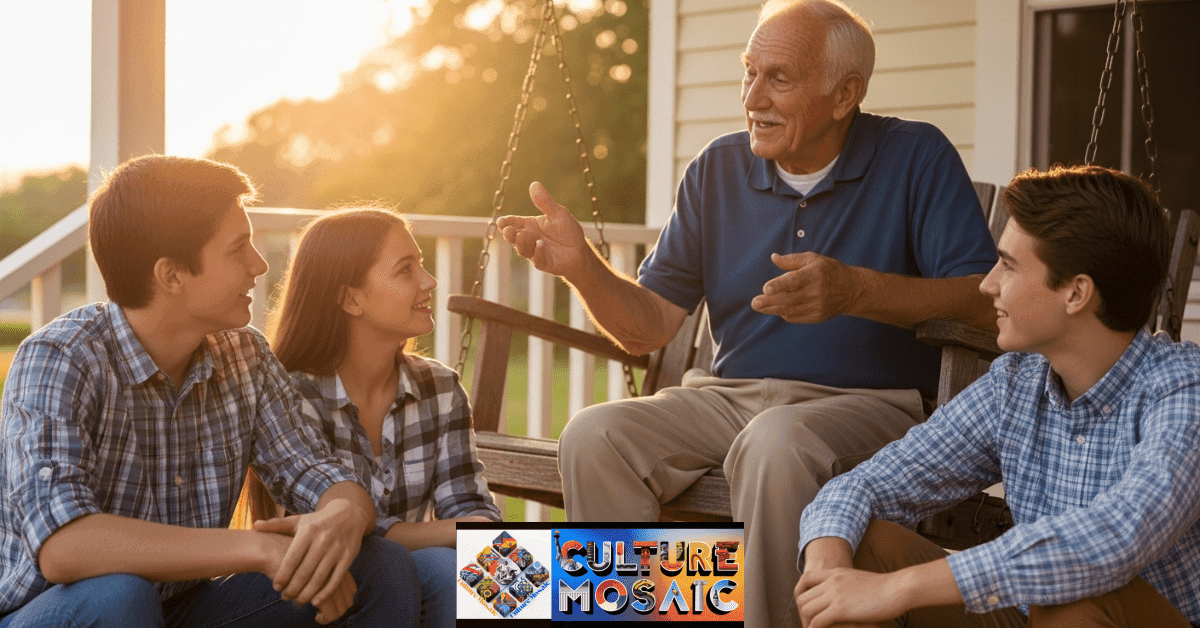
Every family has that one story everyone knows. In mine, it’s about my great-grandfather walking 40 miles in a snowstorm to get to a job interview. Sounds made up, right? But it’s true, and every time someone in my family is nervous about something hard, someone brings up that story.
That’s how intergenerational wisdom traditions work through stories. Nobody sits you down and says, “Be persistent.” Instead, you hear about the time Uncle Jim failed his driving test four times, or how Aunt Maria learned English at 50, or how your mom survived being a single parent for three years.
These stories sink in deeper than advice because they’re real. They’re proof that people like you have done hard things. When my cousin was terrified about starting college, my grandmother told her about being the first person in our family to go to university. Not some inspiring speech—just honest talk about being scared and doing it anyway.
Learning While Doing
My friend Sarah learned to cook from her grandmother. Not from recipes—from standing next to her in the kitchen every Sunday for years. She can now make pierogis that taste exactly right, but she couldn’t write down the recipe to save her life. She knows it in her hands.
That’s intergenerational wisdom traditions at their best. You can’t learn to make bread from a video the same way you learn it from someone who’s made bread three times a week for 40 years. They feel when the dough is right. They adjust for humidity without thinking about it. They know why your bread didn’t rise just by looking at it.
This applies to everything. The contractor who taught me basic carpentry didn’t measure twice because of some rule—he measured twice because he once built an entire deck that was three inches too short. His mistakes became my shortcuts. That’s knowledge you can’t buy.
Rituals Nobody Wants to Admit They Need
My wife’s family does this thing every New Year’s Day. Everyone writes down something they’re leaving behind from the previous year, then they burn the papers. Sounds cheesy, and honestly, it kind of is. But it works. It gives everyone permission to mess up, start over, and acknowledge that last year sucked in some ways.
That’s what intergenerational wisdom traditions do with rituals—they create containers for feelings that are hard to express otherwise. Birthday celebrations aren’t really about cake. They’re about marking time, recognizing growth, and making someone feel seen.
The problem is we’ve stripped a lot of rituals down until they’re meaningless. Holiday dinners where everyone’s on their phones aren’t creating intergenerational connections. But when my grandfather tells the same terrible jokes every Thanksgiving and we all groan, that’s actually bonding. That’s tradition serving its purpose—making us feel like we belong to something ongoing.
Examples From the Real World
The Longest-Living People Do This
Researchers studying people who live past 100 found something interesting. In Okinawa, Japan, and Sardinia, Italy, old people don’t retire to Florida equivalents. They stay involved. They help raise grandkids, tend gardens, and participate in community decisions.
These places show what intergenerational wisdom traditions look like when they’re working. Grandparents aren’t babysitters—they’re teachers of everything from cooking to handling conflicts. Parents aren’t just working and collapsing—they have help and perspective. Kids grow up around people of all ages, learning that getting older doesn’t mean becoming useless.
Plus, the food is better. Traditional diets that kept people alive for centuries tend to beat whatever diet trend is popular this year. That’s intergenerational wisdom traditions in the most literal sense—eat what great-grandma ate, live longer.
Indigenous Communities Got This Right
Native American tribes, Aboriginal Australians, Maori people—they maintained intergenerational wisdom traditions that we’re only now realizing were incredibly sophisticated. Take fire management. For thousands of years, indigenous people in California used controlled burns to manage forests.
White settlers showed up, said “that’s primitive,” banned it, and now California burns down every summer. Rangers are finally asking indigenous fire practitioners, “Um, can you teach us?” That’s intergenerational wisdom traditions being rediscovered because modern approaches failed.
Same thing with sustainable fishing, water conservation, tracking animal patterns, and predicting weather. This isn’t mystical knowledge—it’s careful observation refined across generations. It works because it’s been tested repeatedly in specific places under changing conditions.
The Old Circle Method
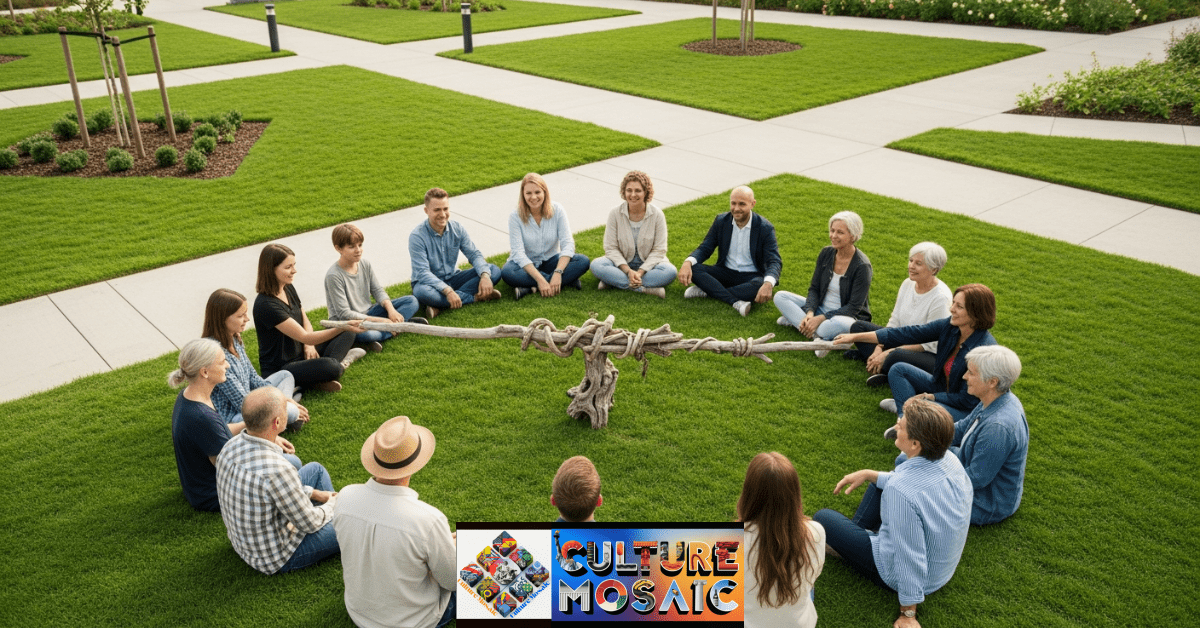
Before we had conference rooms and org charts, people sat in circles to make decisions. Everyone could see everyone else. Nobody’s at the head of the table. Each person speaks without interruption.
Some schools and businesses are bringing this back because it turns out hierarchical meetings where the boss talks and everyone else pretends to listen aren’t that effective. Circle processes—one of the oldest intergenerational wisdom traditions—create space for actual dialogue.
I saw this work at a neighborhood meeting about parking. Usually, these turn into screaming matches. But using a talking circle method, where you could only speak when holding an object that got passed around, people actually listened. The 80-year-old who’d lived there forever had insights the new parents hadn’t considered. The teenagers brought up angles the adults missed. Nobody’s wisdom was more valuable—it all mattered.
Actually Doing This in Your Life

Ask Better Questions
If you want to tap into your family’s intergenerational wisdom traditions, stop asking surface questions. “How are you?” gets “fine.” Try:
“What’s the biggest risk you ever took?”
“When did you realize that you were an adult?”
“At my age, what do you wish you’d known?”
Record these conversations. I interviewed my grandmother for a school project and didn’t record it. She died two years later. I remember the gist of what she said, but I can’t hear her voice anymore. Don’t make that mistake.
Make Time, Not Events
Intergenerational wisdom traditions need consistency, not big dramatic moments. My daughter FaceTimes her grandfather every Wednesday. That’s it. They talk for 20 minutes about nothing important—school, his garden, a weird bird she saw.
But over time, he’s taught her things. How to identify clouds. When to plant different vegetables. Stories about our family that I’ve forgotten. None of this would happen from one annual visit. It happens because they talk regularly, and there’s space for random tangents.
Find your version. Maybe it’s Sunday breakfast with your parents. Maybe it’s a monthly skill-sharing thing where everyone teaches something. The format doesn’t matter much. Showing up does.
Adapt or Die
Here’s where people mess up intergenerational wisdom traditions—they confuse the essence with the format. My grandmother was horrified when I wanted to digitize her recipe collection. “Recipes should be handwritten!” she said.
But her recipes were handwritten because that’s what you did in 1950. The point was preserving knowledge, not the medium. Now those recipes are on a shared cloud drive where cousins in three different countries can access them, add notes, and share photos of their attempts. That’s respecting tradition while adapting it.
Don’t replicate things just because that’s how it was done. Ask what problem the tradition solved, then solve that problem using current tools.
What You Actually Get From This
Less Anxiety
I used to have panic attacks about money. Then I learned my dad went bankrupt at 30. My mom was evicted from an apartment at 25. My grandfather lost a business during the recession. And they all survived, rebuilt, and ended up okay.
That’s what intergenerational wisdom traditions do for mental health—they give you proof that hard things are survivable. When everyone around you is your age and facing the same things, you have no perspective. When you know your family’s history, you know people have weathered worse.
Plus, having older people to talk to means you’re not getting all your advice from peers who are as clueless as you are. My friends were useless when I was deciding whether to quit my job. My uncle, who’d changed careers twice, asked me questions that actually helped.
Actual Community
My street has a mix of families, retirees, and young professionals. We organized a tool library where everyone shares equipment. Sounds practical, but what actually happened was intergenerational connections. The retired engineer teaches people how to use tools. Parents coordinate childcare swaps. Young professionals help older neighbors with tech problems.
These intergenerational wisdom traditions create networks that matter when things go wrong. During the last storm, nobody was isolated because we all knew each other. That doesn’t happen automatically—it requires structure that brings different ages together.
Solutions to Real Problems
My electric bill was ridiculous until my neighbor showed me her grandmother’s trick for keeping a house cool—opening windows at night to pull in cold air, closing them in the morning, using awnings and curtains strategically. It’s not sexy, but my bill dropped 30%.
Intergenerational wisdom traditions often have solutions that don’t require buying anything. Food preservation, clothing repair, natural remedies that actually work, and ways to entertain yourself without screens. This isn’t about being anti-technology. It’s about having more options.
The Actual Problems
Everyone Lives Somewhere Else
My brother’s in Seattle. My sister’s in Austin. Our parents are in Florida. We’re scattered. That’s normal now, and it makes intergenerational wisdom traditions harder.
But not impossible. We have a family group chat that’s actually active. We do video calls for birthdays. Last month, my mom walked my brother through fixing his disposal over FaceTime. It’s not the same as living near each other, but it’s something.
Technology can support intergenerational connections if you use it intentionally. The problem is when it replaces them entirely.
The “OK Boomer” Problem
Sometimes, younger people dismiss older wisdom as outdated. Sometimes they’re right. My dad’s advice about job hunting (“just walk in and ask for the manager”) hasn’t worked since 1985.
But throwing out all advice because some of it’s dated is stupid. His underlying point—be proactive, show initiative, don’t just submit applications online—still matters. Intergenerational wisdom traditions work when both sides are willing to translate. Older people need to update their examples. Younger people need to look past the examples to the principle.
Nobody Talks Anymore
We’ve built a society where different generations rarely interact outside of families. Kids go to school with kids. Adults work with adults. Old people live in retirement communities. Then we wonder why nobody understands each other.
Breaking this requires intentional effort. Volunteer programs that mix ages. Community spaces designed for multiple generations. Businesses that hire teenagers and retirees, not just 30-year-olds.
Intergenerational wisdom traditions can’t happen if generations are segregated.
Where This Goes
The future isn’t choosing between old ways and new ways. It’s combining them intelligently. Architects are studying ancient passive cooling techniques and incorporating them into modern buildings. Doctors are researching traditional herbal remedies with scientific methods. Farmers are reviving crop rotation systems that work better than chemical-intensive monoculture.
This is what healthy intergenerational wisdom traditions look like—respect for what worked, willingness to test it properly, adaptation for current contexts.
Why Does Any of This Matters
You’re going to get old. Hopefully. When you do, you’ll have accumulated decades of hard-won knowledge about how to live. You’ll want someone to care about that. You’ll want to feel useful, not warehoused.
The only way that happens is if we maintain intergenerational wisdom traditions now. If we value what older people know. If we create structures where wisdom actually gets passed down instead of dying with each generation.
Plus, you need it now. Whatever you’re struggling with, someone in your family or community has probably faced something similar. Their experience isn’t a solution, but it’s a starting point. It’s proof that people survive hard things.
Intergenerational wisdom traditions aren’t about nostalgia or reverence. They’re about not being stupid enough to ignore free help from people who’ve already figured out what you’re trying to learn.
My leaking faucet got fixed because my dad showed me something years ago. That’s not profound—it’s just practical. And practical wisdom, passed down from people who learned it the hard way, is worth more than any subscription service.
Frequently Asked Questions
What are intergenerational wisdom traditions?
They’re the ways older people teach younger people stuff that works—through stories, hands-on learning, and just spending time together. It’s how families and communities have always passed down knowledge, skills, and values. Not formal education, just life experience shared across generations.
Why should I care about intergenerational wisdom traditions?
Because googling things only gets you so far. Older people have solved problems you’re facing right now. They have perspective on change because they’ve lived through more of it. Plus, these connections improve mental health for everyone involved and create stronger communities. It’s useful, not just sentimental.
How do I start learning from older people?
Ask specific questions about their actual experiences, not generic “how was your life” stuff. Spend regular time together, even if it’s just phone calls. Learn something hands-on from them—cooking, building, fixing things. Record their stories. The key is consistency, not dramatic heart-to-hearts.
What if I don’t have grandparents or older family?
Connect with neighbors, volunteer at senior centers, join community groups, or find mentors through work or hobbies. Every older person has knowledge worth learning. You can create intergenerational wisdom traditions outside your family while also starting new traditions for the next generation.
Do traditions need to stay exactly the same?
No. The point is preserving the core wisdom, not the exact format. If your grandmother’s Sunday dinner tradition doesn’t work with your schedule, maybe it becomes a monthly video call. Adapt the method, keep the essence. That’s how traditions survive instead of dying out.