
 By Culture Expert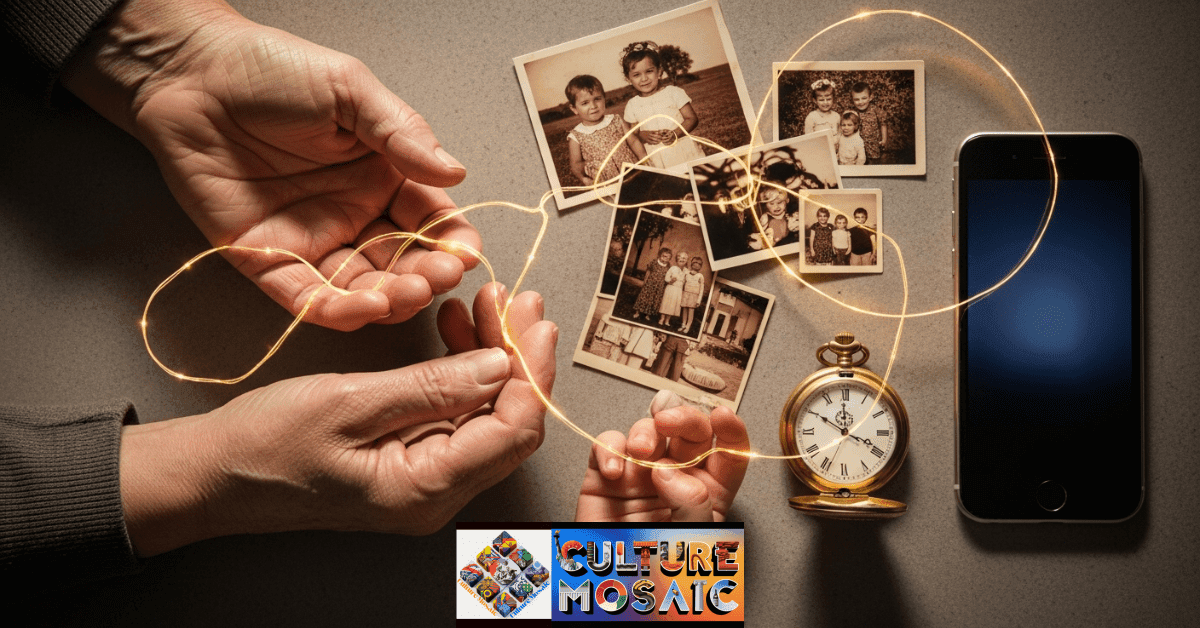
Generational Heritage IQ: There’s something your grandmother knows that Google doesn’t. Maybe it’s how she survived on next to nothing during hard times. Maybe it’s the exact way to fold dumplings so they don’t fall apart. Maybe it’s just the way she talks about facing fear that makes you feel braver.
That’s Generational Heritage IQ, and we’re losing it faster than we realize.
What Is Generational Heritage IQ?
Generational Heritage IQ is your ability to understand and use the wisdom that’s been passed down in your family. It’s not about memorizing names on a family tree. It’s about knowing the stories, values, and practical skills that make your family who it is.
Think of it this way: your great-grandfather didn’t just fix cars. He had a whole approach to problem-solving that he learned from his father, who learned it from his father. That way of thinking got passed down like an inheritance, except nobody wrote it in a will. That’s Generational Heritage IQ.
Why This Matters Right Now
Culturally transmitted information makes innovation possible through serendipity, recombination, and incremental improvement. When we lose family wisdom, we’re not just losing old stories. We’re losing proven ways of solving problems that took generations to develop.
In 2026, we’re facing something unprecedented. The last generation that remembers life before the internet is getting older. When they’re gone, we lose their perspective on resilience, on building things that last, on maintaining relationships without screens between us.
The Three Parts of Heritage IQ
Your Generational Heritage IQ has three main components that work together.
Stories That Shape You
This is about knowing your family’s narratives and why they matter. It’s understanding that when your dad talks about walking to school in the snow, he’s not just complaining. He’s explaining where his toughness comes from.
Skills You Can Actually Use
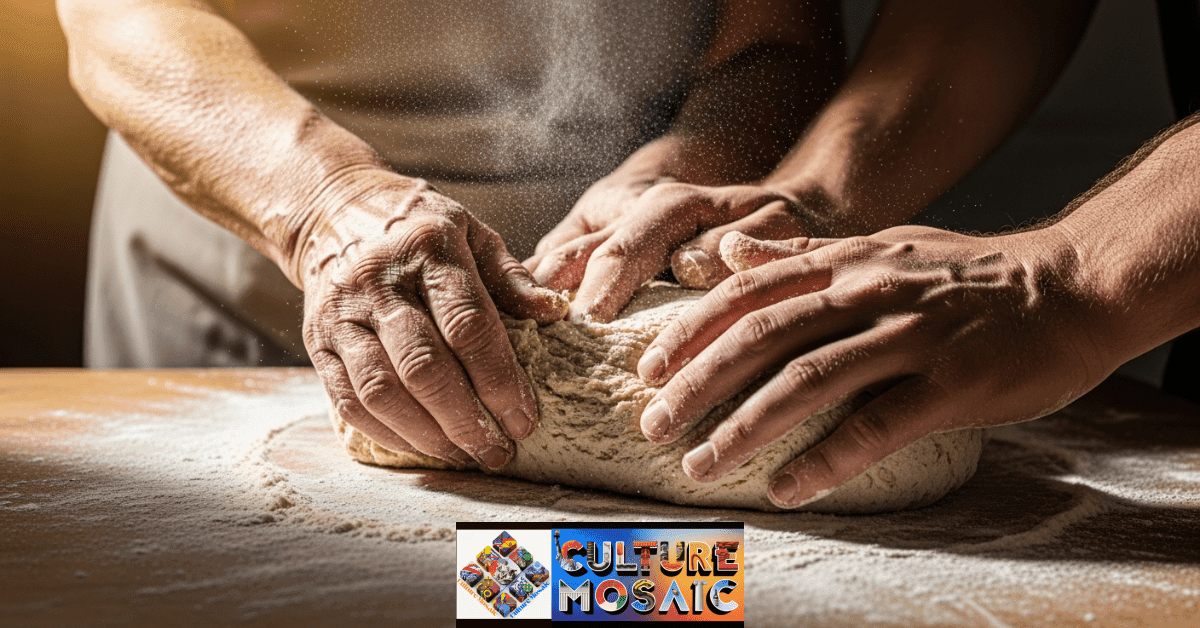
These are the practical things your family knows how to do. Cooking without recipes. Fixing things instead of replacing them. Growing food. Managing money during tough times. These skills carry wisdom about self-reliance and resourcefulness.
Values That Guide Decisions
This is the deepest layer. It’s understanding why your family makes certain choices. Why do they value education? Why do they save everything? Why do they always help neighbors? These values are your inheritance, even if nobody explicitly taught them to you.
How Different Generations See Heritage: Generational Heritage IQ
Here’s what’s interesting: every generation values heritage differently, and that’s causing problems.
Baby Boomers and the Silent Generation kept everything physical. Photo albums. Handwritten recipes. Letters. They saw heritage as something you preserved exactly as it was. The goal was continuity, keeping things unchanged.
Gen X and Millennials started digitizing. They scanned those photos, typed up those recipes, and recorded video interviews. They understood that paper deteriorates, so they tried to preserve the heritage by changing its format. Their goal was preservation through adaptation.
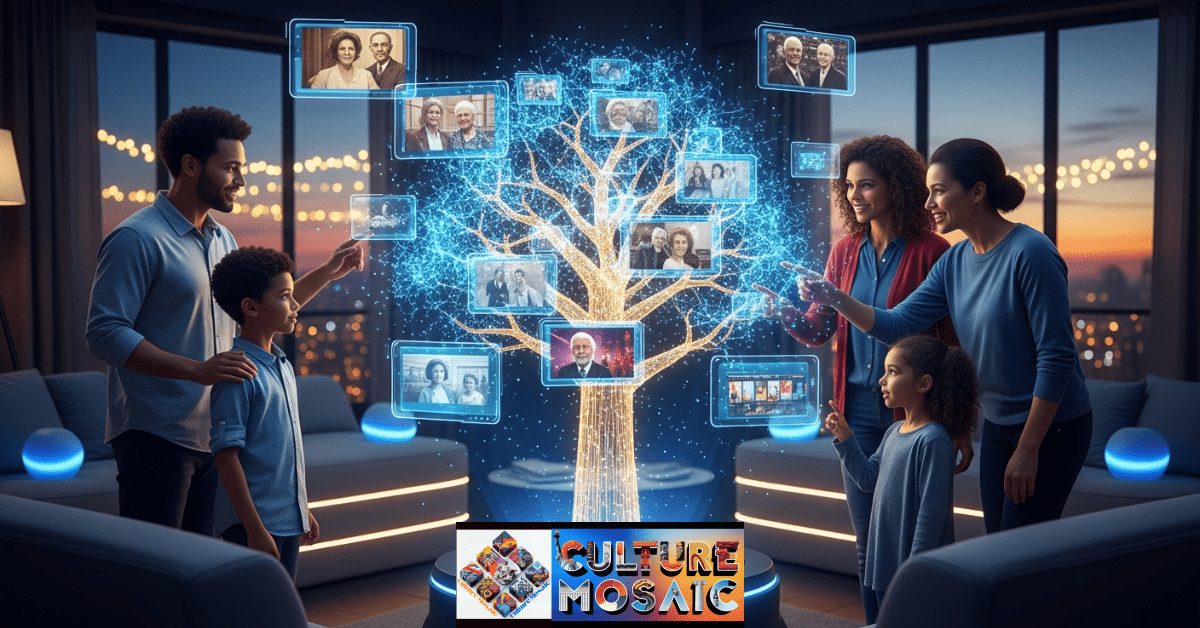
Gen Z and Gen Alpha want heritage to be interactive. They’re not satisfied with just looking at old photos. They want AR experiences where they can see their great-grandmother’s childhood home overlaid on the current street. They want to engage with heritage, not just observe it.
Bridging the Gap
The challenge is making heritage feel alive to people who grew up with TikTok. Combining the tech skills of younger generations with the vast knowledge of elders can lead to creative preservation methods like recording oral histories and creating digital archives.
You could create an interactive map showing where your family lived over generations, with photos and stories attached to each location. You could record your grandfather’s voice explaining how to do something he’s expert at, then practice along with the recording. You could even gamify it, creating challenges where younger family members learn traditional skills and share their progress.
Why Your Family’s IQ Is Worth More Than Money
Generational Heritage IQ represents real wealth that banks don’t measure. The problem-solving approaches your ancestors used during economic crashes. The relationship skills that kept communities together when times were hard. The creativity that came from having to make do with less.
Knowledge and cultural heritage passed down create a sense of belonging and strengthen cultural ties between generations. Families with strong Generational Heritage IQ handle crises better. They have more resources to draw from, not financial resources, but practical wisdom resources.
Let’s say someone in your family learned traditional food preservation during the Great Depression. That’s not just a quaint story. That’s knowledge about fermentation, about storing food without refrigeration, about creating nutritious meals from scraps. In an uncertain economy, those skills have real value.
Building Your Heritage IQ: Start Here
You don’t need fancy equipment or a lot of time. You just need to start before it’s too late.
Have Real Conversations
Stop having surface-level chats with your older relatives. Ask them questions that reveal wisdom, not just facts.
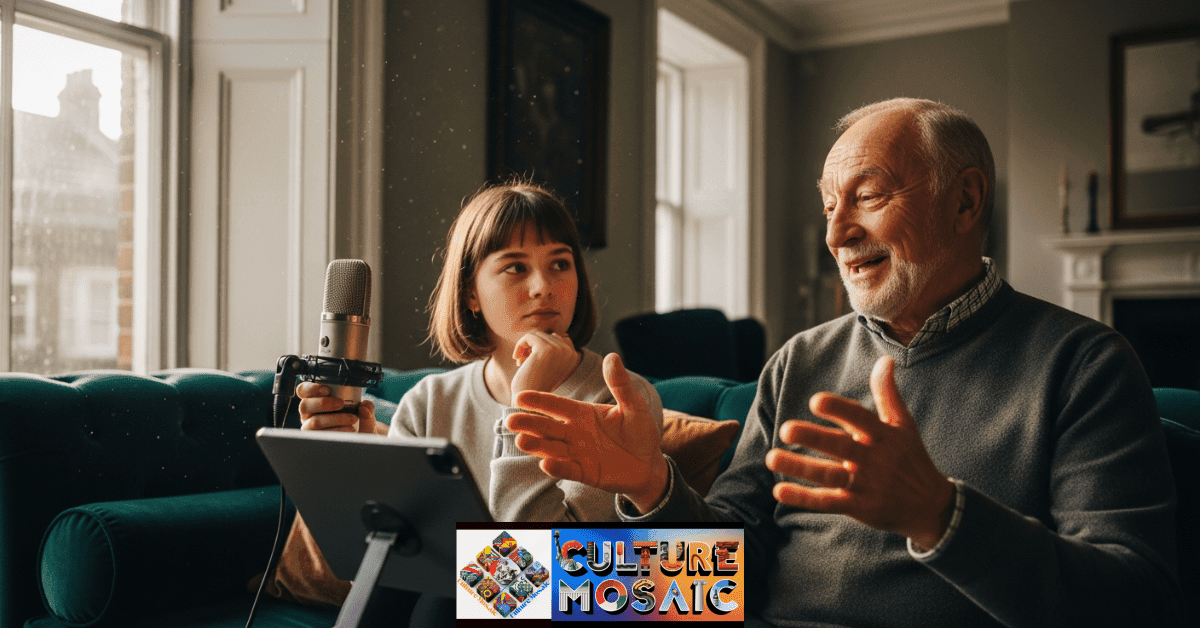
Try these: “Tell me about a time when everything went wrong. What did you do?” Or “What skill do you have that people my age don’t learn anymore?” Or “What’s the worst advice you ever got, and how did you figure out it was wrong?”
Record these conversations if you can. Video is best because you capture expressions and tone, but even audio is valuable. Don’t let the technology stop you, though. If your grandmother won’t talk on camera, skip the camera. The information matters more than the format.
Save What Matters
Once you have these stories and skills documented, you need to store them somewhere safe. Use cloud storage for redundancy, but keep local backups too. External hard drives fail less often than you’d think, but cloud services can change their terms or go out of business.
Here’s what most people forget: metadata. That photo of three women in old-fashioned dresses is useless without context. Who are they? When was this taken? Where? What was the occasion? Write this information down while people who know are still alive to tell you.
Choose Your Artifacts
Not everything needs to be saved, but some physical objects matter deeply. Maybe it’s your grandfather’s toolbox with his name etched inside. Maybe it’s your grandmother’s wedding ring. Maybe it’s a quilt made from scraps of family clothing.
Choose one or two objects per generation and document them thoroughly. Photograph them from every angle. Measure them. Describe what they’re made of. Most importantly, record their stories. Why did this matter to the person who owned it? How was it used? What memories attach to it?
What Good Heritage IQ Looks Like: Generational Heritage IQ
You know you’re developing strong Generational Heritage IQ when certain things become true for you.
Can you tell detailed stories about your grandparents’ lives, including the hard parts they overcame? Do you know at least one skill or recipe that’s been passed down for multiple generations? Can you identify which of your values came from family influence versus popular culture?
High Generational Heritage IQ also means understanding historical context. You know your grandfather’s work ethic was shaped by living through the Depression. You understand your grandmother’s limited education reflected gender expectations of her time. You’re not just collecting facts, you’re comprehending the forces that shaped your family’s choices.
Test Your Current Level
Here’s a quick assessment. Name your eight great-grandparents. Have you recorded any interviews with elderly relatives in the past year? Do you maintain any traditions from previous generations? Can you prepare a family recipe without looking it up? Do you own any physical objects with documented family history?
Each yes strengthens your foundation. Each no-show shows you where to focus your effort. The goal isn’t perfection. It’s a continuous improvement in your ability to access and transmit ancestral wisdom.
Getting Past Common Obstacles
Most people want to build their Generational Heritage IQ, but run into roadblocks. Distance from older relatives. Family conflicts. Language barriers. Limited time.
Distance doesn’t have to stop you. Schedule regular video calls focused specifically on heritage topics, not just catching up on daily life. Record these calls. Even a 15-minute monthly conversation adds up over time.
If family relationships are strained, heritage work can create neutral ground for reconnection. “Can you teach me how to make your famous bread?” I asked. is less threatening than “We need to talk about our issues.” Food and skills often open doors that conversation can’t.
For language barriers, involve bilingual family members as bridges. Or use these conversations as chances to learn ancestral languages together. Even stumbling through questions in your grandmother’s native tongue shows respect that deepens the connection.
The Future of Heritage IQ: Generational Heritage IQ
Technological advancements like social media, podcasts, and digital storytelling platforms enable older generations to share knowledge with broader audiences, fostering intergenerational connections. The families that thrive in the coming decades will be those that master this balance between tradition and innovation.
Some families are already creating annual heritage days where different generations teach each other skills. Others establish family foundations or archives. Some use DNA testing not as an endpoint but as a starting point for deeper research into ancestral experiences.
The best approaches use technology to enhance, not replace, face-to-face connections. Virtual reality might let you explore your ancestral village, but it can’t replace sitting beside your grandfather while he fixes an engine, absorbing his methodology through observation.
Why This Can’t Wait
Every day, irreplaceable knowledge disappears. Someone’s grandmother forgets how to make that special dish. Someone’s grandfather passed away before anyone recorded his stories about the old neighborhood. Someone’s great-aunt takes her craftwork techniques to the grave.
You can’t preserve what you don’t know exists. You can’t record people who are no longer here. You can’t learn skills from relatives who’ve passed on.
The time to build your Generational Heritage IQ is now, while the people who carry your family’s wisdom are still alive to share it.
Frequently Asked Questions About Generational Heritage IQ
What exactly is Generational Heritage IQ?
Generational Heritage IQ measures your ability to understand and use the wisdom passed down in your family. It includes knowing family stories, maintaining traditional skills, and understanding the values that guide your family’s decisions.
How is Heritage IQ different from regular IQ?
Regular IQ measures cognitive abilities like reasoning and problem-solving. Generational Heritage IQ measures cultural intelligence: your understanding of family history, your ability to preserve traditions, and your skill at applying ancestral wisdom to modern challenges.
Can I build Heritage IQ if my family doesn’t share information?
Yes. Start with public records and genealogy websites. Connect with distant relatives online. Interview family friends who knew previous generations. Research the historical contexts that shaped your family even without direct testimony.
When should I start developing my Heritage IQ?
Right now, regardless of your age. Kids can start with simple storytelling and traditional observation. Adults should prioritize interviewing elderly relatives before opportunities are lost. Starting is never too early or too late.
How do I get young people interested in heritage?
Make it interactive and relevant. Use technology they enjoy. Connect family history to topics they care about. Involve them in creating heritage content rather than just consuming it. Let interest develop naturally without forcing it.
Your Generational Heritage IQ is the bridge between past wisdom and future resilience. Start building it today, before the opportunity disappears forever.