
 By Marcus J. Holloway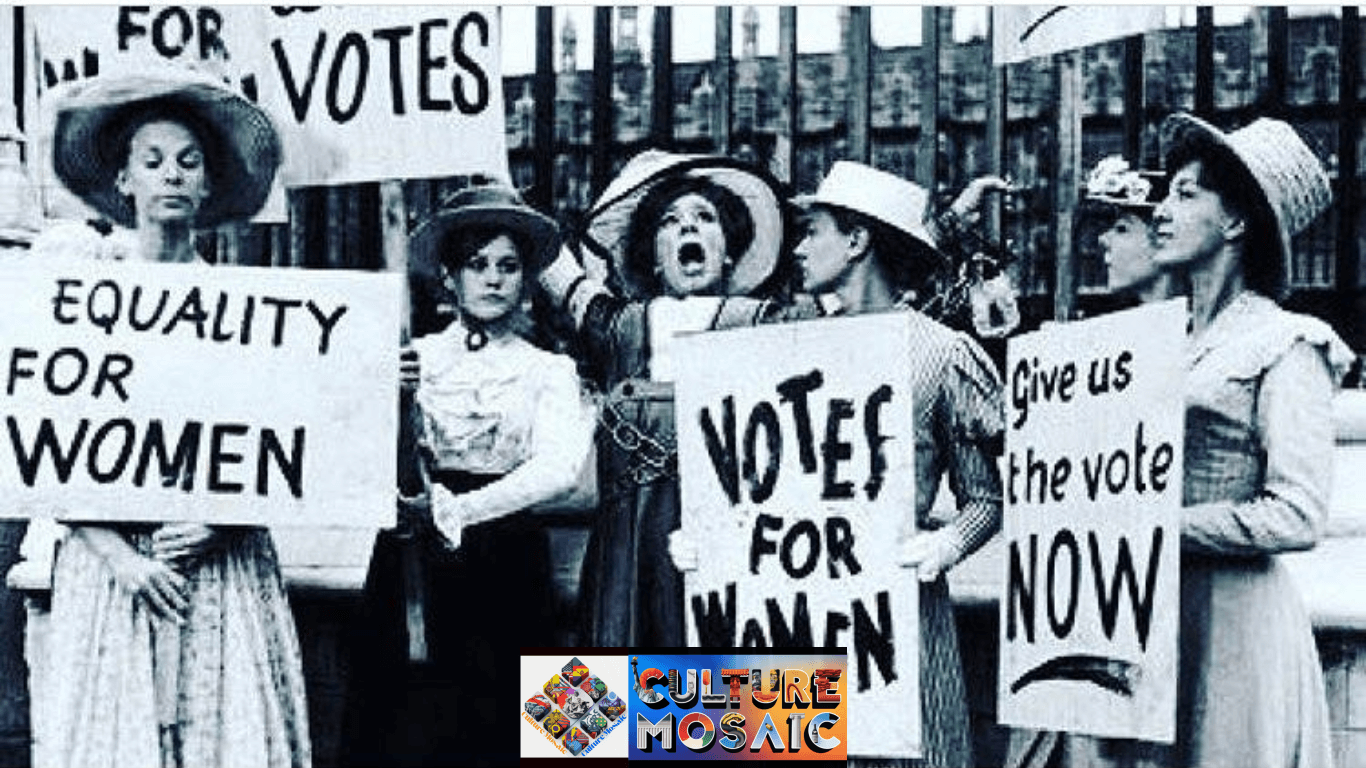
Tracing the Historic Milestones of Women’s Voting Rights USA (1869–1971)
Quick Summary: Answer Block
When did women get the right to vote in the United States?
Women gained federal constitutional voting rights when the 19th Amendment was ratified on August 26, 1920. However, full, unrestricted voting access for all American women was realized in stages over seven decades:
- 1869–1918: Western territories and states (starting with Wyoming in 1869) granted women full or partial state suffrage.
- August 26, 1920: The 19th Amendment prohibited sex-based voter discrimination nationwide, primarily granting full access to white women.
- June 2, 1924: The Indian Citizenship Act extended citizenship and potential voting rights to Native American women.
- June 27, 1952: The Immigration and Nationality Act of 1952 removed racial bars to naturalization, enabling Asian American women to vote.
- August 6, 1965: The Voting Rights Act of 1965 outlawed discriminatory literacy tests and poll taxes, securing functional voting access for Black women in the South.
- July 1, 1971: The 26th Amendment lowered the national voting age to 18, extending rights to young women.
I’ve spent the better part of two decades reading old newspaper clippings, court transcripts, and the kind of dusty pamphlets that smell like a basement archive in July. Civic history is my beat, and I think the story of the women’s suffrage movement is one of the most underrated political dramas this country has ever produced. It’s got prison cells, a near-fatal hunger strike, a mother who swung a state legislature with one letter, and a fight that didn’t actually end when the ink dried on the 19th Amendment. I write about this because I think people deserve the unvarnished version, not the textbook footnote.
Civic participation, voting history, and the legal architecture of American democracy are not static concepts. Every time a state legislature debates voter ID laws or mail-in ballot deadlines, they’re standing on ground that suffragists fought to clear a century ago. Understanding Culture mosaic and the evolution of democratic rights requires looking beyond the simplified, tidied-up narrative.
The Problem: Taxation Without Representation in a Constitutional Democracy
For the first seven decades of American independence, more than half the adult population was completely excluded from the ballot box. Under the legal doctrine of coverture, a married woman had no independent legal existence: she could not own property, keep her own wages, sign contracts, or vote for the representatives whose laws governed her daily life.
Women were taxed, held accountable to criminal laws, and expected to raise democratic citizens, yet they were systematically denied Civic Literacy and direct political agency. The central struggle of Women’s Voting Rights USA was exposing the blatant contradiction between the Declaration of Independence’s assertion that governments derive their just powers “from the consent of the governed” and the reality of an all-male electorate.
The Pain: The High Cost of Demanding the Ballot
Demanding the right to vote was not a polite afternoon tea; it brought severe social, legal, and physical consequences. Women who spoke out publicly were routinely ostracized, vilified in news media, disowned by families, and physically assaulted at public rallies.
During the push for national recognition, activists endured immense suffering:
- Courtroom Convictions: Pioneers like Susan B. Anthony were indicted and tried as criminals simply for casting a ballot.
- Mob Violence: During the 1913 Woman Suffrage Procession in Washington, D.C., thousands of marchers were harassed, shoved, and spit upon while police stood by.
- Imprisonment and Force-Feeding: In 1917, women picketing outside the White House were arrested and held in notorious workhouses like Occoquan. When Alice Paul and others went on hunger strikes to demand political prisoner status, guards force-fed them raw eggs and milk through nasal tubes.
Understanding these sacrifices helps ground contemporary discussions surrounding Understanding Civic Duty and the responsibilities of modern voter participation.
The Solution: A Multi-Generational Campaign for Federal Reform
The victory for Women’s Voting Rights USA required a multi-pronged strategy that combined state-by-state legislative victories, constitutional litigation, public demonstrations, and intense congressional lobbying.
1. The Early Roots: Seneca Falls and the First Cracks in the Wall
Most people can name one date in this whole saga: 1848, Seneca Falls. Elizabeth Cady Stanton and Lucretia Mott organized a gathering that was originally about women’s broader legal rights: property ownership, custody, and wages. Voting was almost an afterthought in the draft resolutions. Stanton insisted on adding it anyway, and it nearly tanked the whole convention until Frederick Douglass backed her, helping the suffrage resolution pass by a narrow margin.
After Seneca Falls, the movement split over the Fifteenth Amendment in 1869, which secured voting rights for Black men but omitted women. This broke the coalition into two camps: the National Woman Suffrage Association (NWSA) under Stanton and Susan B. Anthony, and the American Woman Suffrage Association (AWSA) under Lucy Stone. They did not reunite until 1890 as the National American Woman Suffrage Association (NAWSA).
This history reminds us how coalition building forms the baseline for Local Civic Engagement Strategies and modern community organizing.
2. Susan B. Anthony’s Arrest and the Courtroom Fight
In 1872, Susan B. Anthony walked into a Rochester, New York polling place and cast a ballot, arguing that the Fourteenth Amendment’s citizenship clause naturally granted her voting privileges. She was arrested two weeks later. Her trial in 1873 was a sham—the judge directed the jury to convict before deliberations even began, then fined her $100, which she refused to pay on principle.
Although she lost the immediate legal trial, Anthony’s constitutional defense established a foundational record for Civic Literacy that inspired future legal challenges. (For details on earlier municipal pioneers, see Who Was the First Woman to Vote Legally in the US?).
3. Western States Lead the Way Before the Federal Government Catches Up
Long before Washington acted, Western territories and states granted women full voting rights:
- Wyoming Territory (1869): Granted full suffrage, retaining it upon entering statehood in 1890.
- Utah Territory (1870): Passed voting access for women early, though federal legislation temporarily revoked it in 1887 before statehood.
- Colorado (1893) & Idaho (1896): Approved full suffrage via popular referendum.
By 1916, women could vote in twelve states. This patchwork strategy provided real-world proof that female enfranchisement did not cause social collapse, proving the value of state-level innovation much like modern Tactical Urbanism in Community Civic Engagement.
Milestones to Full Voting Rights (1869–1971)
4. Alice Paul, Picketing, and the Hunger Strikes of 1917
Alice Paul founded the National Woman’s Party and introduced radical tactics inspired by British suffragettes. Starting in January 1917, her “Silent Sentinels” picketed the Woodrow Wilson White House six days a week.
When arrested on charges of “obstructing traffic,” dozens were sent to Virginia’s Occoquan Workhouse. During the “Night of Terror” in November 1917, guards brutalized the prisoners. Alice Paul’s subsequent hunger strike and forced feedings leaked to the press, generating massive public sympathy that pressured the federal government into action—a classic historical example of Community Activism Strategies.
5. Carrie Chapman Catt’s “Winning Plan” and Tennessee’s Final Vote
Carrie Chapman Catt took over NAWSA in 1915 and executed the “Winning Plan”—a disciplined campaign running state lobbying efforts simultaneously with federal advocacy.
When Congress passed the amendment in June 1919, ratification came down to Tennessee in August 1920. The vote hinged on 24-year-old legislator Harry Burn, who planned to vote against the measure until he received a letter from his mother, Febb Burn, urging him to “be a good boy” and vote for suffrage. He switched his vote, Tennessee ratified by a single vote, and the 19th Amendment became law on August 26, 1920.
Intersectional Realities: Who Gained the Right to Vote in 1920?
A crucial requirement of accurate historical reporting is recognizing that the 19th Amendment did not enfranchise all women equally in 1920.
While the amendment prohibited sex-based discrimination, state Jim Crow laws—such as poll taxes, literacy tests, grandfather clauses, and violent intimidation—effectively disenfranchised most Black women in the South for another 45 years. Prominent Black suffragists, including Ida B. Wells-Barnett, Mary Church Terrell, and Nannie Helen Burroughs, fought both sexism and racism, often confronting marginalization within the suffrage movement itself. When told to march at the back of the 1913 parade, Ida B. Wells-Barnett refused and joined her state delegation mid-march.
Full voting rights for all women required subsequent legislative protections:
- Native American Women: Secured federal citizenship in 1924 through the Indian Citizenship Act, though some states used local loopholes to deny voting rights until 1962.
- Asian American Women: Gained naturalization rights and citizenship access via the Immigration and Nationality Act of 1952.
- Black Women: Gained structural protections through the landmark Voting Rights Act of 1965, which eliminated poll taxes, literacy tests, and voter intimidation mechanisms.
- Young Adult Voters: Gained access when the 26th Amendment lowered the voting age to 18 in 1971.
This ongoing expansion reflects modern concepts of Diverse Civic Harmony and Social Change in Modern Society.
Connecting History to Modern Civic Action
The legacy of the suffrage movement continues to influence modern democratic participation. Understanding this history strengthens our commitment to Civic Engagement and highlights the importance of taking advantage of local ballot opportunities.
For readers seeking to apply these principles today:
- Explore 10 Civic Engagement Opportunities to get involved locally.
- Understand Why Is Voting Important in Local Elections? to appreciate how local policies shape daily life.
- Learn how to get involved in local civic issues online to advocate for voting access and community initiatives.
Whether through participating in Hyperlocal Digital Deliberation, utilizing civic participation tools, or reviewing the Civic Leader’s Playbook, the lessons of the suffrage movement demonstrate that democracy requires ongoing, active participation.
Credible Historical Sources & Scholarly References
- National Archives and Records Administration (NARA): Primary documentation on the 19th Amendment to the U.S. Constitution.
- Library of Congress: Special collection on Women’s Suffrage in the United States.
- Smithsonian National Museum of American History: Online exhibit on Votes for Women: A Portrait of Persistence.
- Wikipedia Historical Index: Detailed reference background on Women’s Voting Rights USA.
Frequently Asked Questions About Women’s Voting Rights USA
Did women get the right to vote in 1920 in America?
Yes, the 19th Amendment was officially ratified on August 26, 1920, removing sex-based voting restrictions nationally. However, state-level voter suppression laws, literacy tests, and poll taxes continued to deny real access to millions of Black, Native American, and Asian American women until subsequent civil rights legislation passed decades later.
When did Black women get the right to vote in America?
While Black women technically gained legal protection under the 19th Amendment in 1920, state-level discriminatory practices across the South prevented most from casting ballots. Full, enforceable voting rights for Black women were secured through the Voting Rights Act of 1965, which outlawed literacy tests, poll taxes, and discriminatory registration practices.
When did white women get the right to vote in America?
White women gained comprehensive voting rights in 1920 with the ratification of the 19th Amendment. Additionally, many white women living in Western territories and states—such as Wyoming (1869), Utah (1870), Colorado (1893), and Idaho (1896)—enjoyed full voting rights decades prior to the federal amendment.
When did women gain the right to vote at 18?
Women aged 18 to 20 gained the right to vote on July 1, 1971, with the ratification of the 26th Amendment. This lowered the national voting age from 21 to 18 for both men and women across all state and federal elections during the Vietnam War era.
Who were the key figures in the US women’s suffrage movement?
Major figures in the movement included Susan B. Anthony, Elizabeth Cady Stanton, Lucretia Mott, Alice Paul, Carrie Chapman Catt, Sojourner Truth, Ida B. Wells-Barnett, Mary Church Terrell, and Lucy Stone. Each brought unique strategies, ranging from constitutional litigation and state-by-state lobbying to nonviolent civil disobedience and intersectional advocacy.