
 By Culture Expert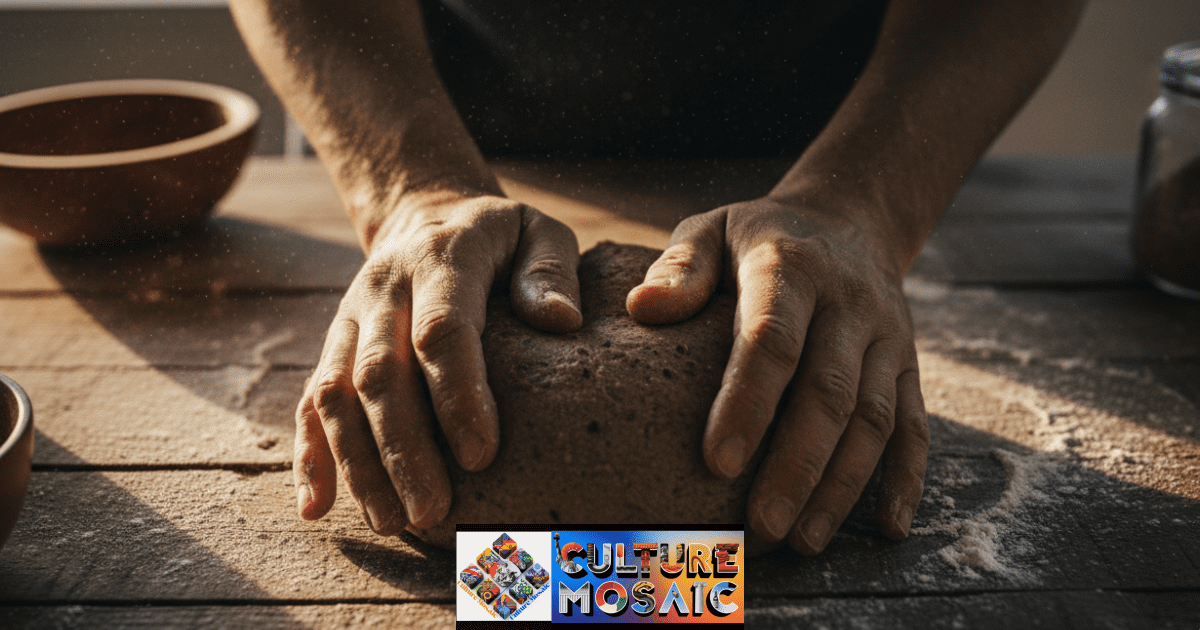

Somatic Heritage Practices • 2026 Edition
Somatic Heritage Practices:
5 Ancestral Rituals to Ground
the 2026 Nervous System
Somatic Heritage Practices are the biological bridge between the sensory world your DNA evolved inside and the environment your body navigates today. When you handle raw clay, tend a fire, or grind spices by hand, you are not being nostalgic — you are sending ancient safety signals to a nervous system that has not changed in fifty thousand years.
There is a quiet crisis running underneath the noise of modern life. It is not anxiety in the clinical sense, though anxiety is part of it. It is the mismatch between a body built for texture, fire, rhythm, and proximity to earth — and a life spent on glass screens in climate-controlled rooms. Somatic Heritage Practices offer a research-backed, practically accessible way to close that gap.
This is not a romanticisation of the past. It is biology, and it has everything to do with how you feel right now.
What Are Somatic Heritage Practices?
The Science of Haptic Memory
The word somatic comes from the Greek soma, meaning body. Heritage, in this context, does not mean tradition for tradition’s sake — it refers to the specific sensory environments that shaped human physiology over millennia. Put them together, and Somatic Heritage Practices describe the deliberate use of ancestral sensory inputs — touch, heat, scent, rhythm, natural materials — to regulate the nervous system in real time.
The Master Clock and Why Your Body Listens to Materials
Deep inside your hypothalamus sits the suprachiasmatic nucleus (SCN), sometimes called the Master Clock. It governs your circadian rhythm, cortisol release, and the timing of virtually every hormone in your body. For most of human history, the SCN was calibrated by specific environmental cues: the amber warmth of fire at night, the resistance of stone tools under the hands, the smell of soil after rain. These were not random. They were biological anchors that told the brain: You are safe. You belong here. Rest.
Research in psychophysiology confirms that handling natural materials — unfinished wood, raw clay, heavy stone — produces measurable reductions in salivary cortisol within minutes. The current hypothesis is that haptic memory, the body’s stored library of touch experiences, interfaces directly with the autonomic nervous system. When your hands encounter the grain of real wood or the cold weight of a river stone, the brain pattern-matches against tens of thousands of years of stored somatic data and concludes: this is a known safe environment. The threat-response dial turns down. Parasympathetic activation rises.
In a world of frictionless touchscreens and synthetic surfaces, the body receives almost none of these inputs. The result is a nervous system stuck in low-grade vigilance — not danger, exactly, but never quite at rest.
Somatic Check-In: 3 Quick Questions
Before reading further, take 60 seconds with these prompts. Your answers will point toward your own cultural sensory triggers.
- What smell makes you feel immediately, physically at home — not just calm, but located?
- Is there a texture — fabric, wood, soil — that your hands return to when you are stressed?
- What kind of light (candlelight, morning sun, fire glow) makes your shoulders actually drop?
These are not metaphors. They are the entry points into your personal Somatic Heritage Practice.
Somatic Heritage Practices are far more than historical curiosity; they represent a biological bridge to the ancestral intelligence stored within our own DNA. In the hyper-digital landscape of 2026, these practices — ranging from rhythmic bilateral weaving to vocal resonance — offer a forensic methodology for discharging modern stress. By engaging with these time-tested traditions, we move beyond superficial wellness into a deeper state of mineral calm. These Somatic Heritage Practices allow the nervous system to bypass the thinking mind, directly targeting the psoas and vagus nerve to recalibrate our evolutionary “software” for a more grounded, resilient existence.
The 5 Pillars of Somatic Heritage Practices
Each pillar follows a simple arc: where the practice comes from, what it does to the body, and how to apply it today. No farm required.
Thermal Rituals — Fire and Water as Nervous System Medicine
From Finnish saunas and Japanese ofuro baths to Moroccan hammams and Scandinavian ice plunges, almost every culture on earth developed structured relationships with heat and cold. These were not luxury — they were physiological maintenance.
Wood-fire cooking, communal bathing, seasonal exposure to cold water
Specific heat ranges (38–42°C) trigger parasympathetic activation and muscle recovery; cold exposure spikes norepinephrine, sharpening focus and reducing inflammation
Today: A 15-minute warm bath before bed, finished with a 30-second cool rinse, mimics this thermal rhythm without a wood-fired boiler.
Haptic Craft — The Resistance of Raw Materials
Your great-grandmother’s hands were never idle. Weaving, carving, kneading bread, grinding grain — these tasks required sustained, effortful contact with material that pushed back. That resistance was not a frustration. It was sensory information that the brain needed.
Hand-weaving, wood carving, bread-making, stone grinding
The resistance of natural materials activates proprioceptive pathways (body position sense) that are largely dormant in frictionless digital environments, reducing cortisol and increasing felt sense of physical groundedness
Today: Hand-making bread, working with potter’s clay, or even grinding coffee with a stone mortar for five minutes activates these same pathways.
Olfactory Anchors — Scent as a Direct Line to Safety
Of all the senses, smell has the most direct anatomical connection to the limbic system — the brain’s emotional and memory centre. Unlike vision or sound, olfactory signals bypass the thalamus and travel straight to the amygdala and hippocampus. This is why a single scent can reconstruct an entire emotional memory in under a second.
Burning frankincense, cedar smoke, fermented foods, rain on earth (petrichor), beeswax candles
Specific heritage scents activate the parasympathetic branch of the autonomic nervous system, lowering heart rate and cortisol. Frankincense resin, for example, contains incensole acetate, which researchers have linked to reduced anxiety in neurological studies
Today: A natural beeswax candle, real cedar wood in your space, or simmering whole spices on the stove costs almost nothing and works within minutes.
Rhythmic Movement — Entraining the Ancestral Pulse
Before gyms, before yoga studios, physical movement was woven into daily life as rhythm: the repetitive motion of the loom, the call-and-response pattern of communal work songs, the steps of traditional dances passed down across generations. This was not exercise. It was entrainment.
Folk dance, agricultural repetitive movement, communal drumming, walking meditation
Entrainment — the synchronisation of biological oscillators (heart rate, brainwaves) to an external rhythm — has been documented in studies of group drumming and repetitive movement. The result is a measurable reduction in cortisol and an increase in social bonding hormones, specifically oxytocin
Today: A 20-minute walk with a steady rhythm (no podcast), repetitive knitting, or any traditional dance practice achieves this effect.
Environmental Cues — Designing the Somatic Home
Your primitive brain is constantly reading the visual environment and asking one question: is this safe? Natural light cycles, organic textures, views of open horizons — these are the signals that whisper yes. Blue-toned overhead lighting at 10pm whispers something very different.
Living by natural light cycles, proximity to open landscapes, sleeping in full darkness
Amber-toned “midnight glow” lighting (under 2700K colour temperature) preserves melatonin production. Raw linen, untreated wood, and rough stone textures send proprioceptive safety cues that smooth, synthetic surfaces cannot replicate
Today: Swap one overhead light for a salt lamp or amber bulb. Place one raw-texture object — a wooden bowl, a stone — where your hands rest.
“Your nervous system did not evolve for frictionless surfaces and blue light at midnight. It evolved for fire, texture, and the smell of earth. Somatic Heritage Practices give it back what it is looking for.”
Somatic Heritage Practices vs. Modern Stress:
A Technical Comparison
| Modern Stressor | Somatic Heritage Solution | Physiological Effect |
|---|---|---|
| Digital Eye Strain | Looking at distant horizons or watching fire | Optic nerve relaxation, reduced ciliary muscle tension |
| Frictionless Living | Working with stone, clay, or raw wood | Proprioceptive grounding, cortisol reduction |
| Circadian Disruption | Traditional candlelight and amber tones after sunset | Melatonin preservation, improved sleep architecture |
| Social Isolation | Communal rhythmic practices (cooking, walking, craft) | Oxytocin release, vagal nerve activation |
| Synthetic Scent Environment | Natural resins, beeswax, fermented foods | Direct limbic activation, amygdala calming |
How to Begin a Somatic Heritage Practice
in a Digital World
Nobody is asking you to move to a farm. The most effective Somatic Heritage Practices are the ones you can build into the architecture of your existing day. Here is a 30-day sensory integration plan — one new anchor per week.
Amber Evenings
Replace one overhead light with an amber or candlelight source after 7pm. No blue screens 90 minutes before sleep.
Hands on Material
Spend 10 minutes daily in direct contact with a natural material: kneading dough, shaping clay, or sanding wood.
The Olfactory Ritual
Introduce one heritage scent (frankincense, cedar, beeswax, or whole spices) as a deliberate morning or evening cue.
The Full Practice
Combine all three anchors with a 20-minute rhythmic walk and one thermal ritual (warm bath, morning sun exposure).
By the end of 30 days, you will not have changed your address, your job, or your diet. You will have changed the sensory language your nervous system is reading every day — and that, physiologically, changes almost everything else.
The Collective Dimension of Somatic Heritage Practices
Why These Practices Work Better Together
Individual Somatic Heritage Practices are effective. But almost every ancestral ritual that these practices draw from was communal by design. The Finnish sauna seated a family. The loom required a community to produce cloth at scale. The fire fed everyone. There is a reason for this beyond practical efficiency: shared sensory experience accelerates entrainment. When two people sit by the same fire, their heart rate variability begins to synchronise within minutes.
Modern applications of this principle include shared cooking rituals, community craft evenings, and group walking practices — none of which require ancient context to produce the same physiological results. The body responds to the sensory input, not the cultural label attached to it.
Cultural Specificity and Personal Heritage
Somatic Heritage Practices are most powerful when they carry personal cultural resonance. The smell that grounds a person raised in Sindh is likely different from the smell that grounds someone raised in rural Scandinavia or coastal Japan. This is not essentialism — it is epigenetics and early-life sensory imprinting. Your most effective somatic anchors will be the ones woven into your own earliest sensory memories. The framework is universal. The content is yours.
Frequently Asked Questions About Somatic Heritage Practices
Download the Somatic Sensory Map for Modern Living
A one-page visual guide mapping each of the five pillars to specific daily moments — morning, work, evening, sleep.
Get the Free Sensory Map