
 By Culture Expert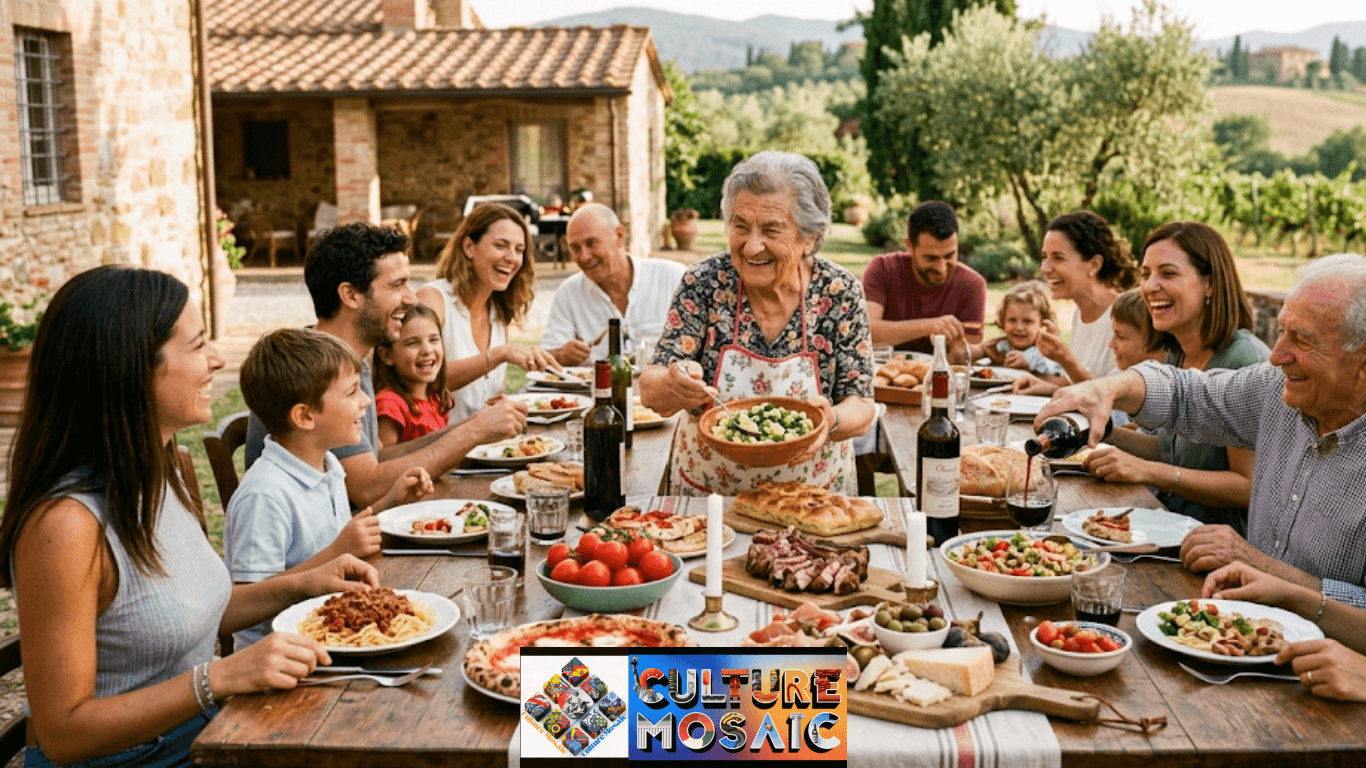
Quick Summary: Italian Culinary Traditions are built on three foundational pillars: regional identity, seasonal ingredients, and the sacred ritual of eating together. Strictly speaking, there is no single national “Italian cuisine.” Instead, Italy consists of twenty distinct regions with twenty distinct pantries. From slow-cooked ragùs and centuries-old preservation techniques to religious feast days, these traditions survive through family repetition, seasonal calendars, and deep-seated cultural memory.
I learned to make ragù the way most Italians learn anything that truly matters: by getting scolded for doing it wrong. My grandmother stood over a bubbling pot for four hours every Sunday of my childhood. If I dared to rush the soffritto, she would gently swat my hand with a wooden spoon that had already survived three generations of the exact same argument.
That isn’t just a nostalgic memory—it is how Italian Culinary Traditions are preserved and transmitted. Not through formal culinary school textbooks, but through generational repetition, gentle correction, and a healthy dose of stubborn passion.
When people ask about Italian food, they often want a neat list: Give me the top ten dishes, give me the rules, wrap it up cleanly. But Italian food culture resists shortcuts. Much of what passes for “Italian” abroad—garlic bread drenched in butter or chicken parmesan the size of a platter—has very little to do with what is actually prepared in an authentic Italian home. Comfort sells when it is simplified, but the real story is older, richer, and far more fascinating.
Where It All Started: A Short, Honest History of Italian Food Culture
Italy as a unified nation state is under 170 years old, yet its culinary roots stretch back millennia. This historical gap explains almost everything about how Italian food culture developed: regionally, unevenly, and out of sheer agricultural necessity. For a deeper look into this evolution, see What Is the History of Italian Cuisine?.
Ancient Roots (Rome) ➔ Columbian Exchange (1500s) ➔ Economic Necessity & Cucina Povera
  (Bread, Wine, Olives)     (Tomatoes, Peppers, Maize)      (Regional Staples & Preservation)
Ancient Rome provided the foundational backbone of bread, wine, and olive oil. However, the modern Italian pantry took a radical turn during the Columbian Exchange in the 16th century, when ingredients like tomatoes, sweet peppers, potatoes, and maize arrived from the Americas. Intriguingly, it took nearly two centuries for Italians to fully trust the tomato; early observers believed it was poisonous. Given how essential the tomato is to modern southern Italian cuisine, it remains one of history’s greatest ironies.
Historical economics shaped the rest. For centuries, fresh meat was a luxury, making pasta, rice, and legumes vital tools for stretching humble ingredients into nourishing meals:
- Southern Italy: Historically agrarian and resource-scarce, the South built its cooking around sun-drenched vegetables, durum wheat pasta, extra virgin olive oil, and seafood.
- Northern Italy: Blessed with fertile plains and cool alpine valleys, the North embraced butter, aged cheeses, polenta, cured meats, and slow-braised ragùs.
That economic divide—North versus South—still shapes every menu across the Italian peninsula today.
Why Food in Italian Culture Runs Deeper Than Flavor
It is a misconception to say Italians simply “love food” as if it were merely a casual hobby. In Italy, food functions as a primary language—a system for organizing time, maintaining relationships, and marking significant life milestones.
Understanding traditional Dining Rituals shows that the multi-course structure (l’ordine dei piatti) is not about formality; it is an enduring cultural framework:
| Course | Name | Traditional Function & Role |
| 1st | Antipasto | Light starter to awaken the palate (cured meats, crostini, pickled vegetables) |
| 2nd | Primo | Carbohydrate course (pasta, risotto, gnocchi, or soup) |
| 3rd | Secondo | Main protein course (fish, meat, or poultry) |
| 4th | Contorno | Side dish of seasonal vegetables or salad, served alongside or after the protein |
| 5th | Dolce | Dessert, fruit, and espresso to gently conclude the meal |
Skipping a course during a formal gathering is rarely viewed as just a light appetite; to older generations, it can feel like a slight against the hospitality of the host. You do not save room in a traditional Italian home—you make room.
Famous Italian Regional Culinary Traditions
To understand Italian cooking, one must explore its regions. Each area maintains its own pride, pantry, and culinary dialect:
- Emilia-Romagna: The undisputed gastronomic engine room of Italy, famous for Parmigiano-Reggiano, Prosciutto di Parma, traditional balsamic vinegar of Modena, and hand-rolled egg pasta.
- Campania: The birthplace of Neapolitan pizza, sweet San Marzano tomatoes, and fresh buffalo mozzarella, supported by rich seafood along the Tyrrhenian coast.
- Sicily: A vibrant Mediterranean crossroads featuring Arab-Norman influences, sweet-and-sour (agrodolce) flavor profiles, citrus groves, and world-renowned street food like arancini.
- Piedmont: Home to delicate white truffles, rich autumn risottos, slow-braised beef dishes cooked in Nebbiolo wine, and hazelnut confectionery.
- Liguria: Famous for vibrant Pesto alla Genovese, fragrant focaccia, and olive oils harvested from steep coastal terraces.
- Puglia: The land of orecchiette pasta, sun-cured tomatoes, wood-fired country bread, and an understated raw seafood tradition (crudo di mare) along the Adriatic coastline.
Across all twenty regions, the unifying thread is Traditional Food Preservation. Curing meats through winter, sun-drying tomatoes in late August, and pickling seasonal vegetables in olive oil (sott’olio) all began as practical answers to winter scarcity. What is romanticized today as “authentic regional cuisine” was originally ingenious survival.
10 Authentic Italian Dishes Everyone Should Actually Try
Moving beyond typical tourist staples reveals the true depth and variety of authentic regional cooking:
- Ragù alla Bolognese (Emilia-Romagna): A slow-simmered meat sauce prepared with a quiet ratio of pork, beef, wine, and milk—served with hand-cut tagliatelle, never spaghetti.
- Cacio e Pepe (Lazio/Rome): A masterclass in minimalist technique utilizing just three elements: pasta water, sharp Pecorino Romano, and toasted black pepper.
- Risotto alla Milanese (Lombardy): Velvet-smooth arborio rice infused with vibrant saffron strands and rich beef marrow.
- Pizza Napoletana (Campania): High-hydration dough cooked at blistering heat in under ninety seconds to yield a pillowy, blistered crust.
- Bistecca alla Fiorentina (Tuscany): A thick, bone-in T-bone cut from heritage Chianina cattle, seasoned simply with sea salt and olive oil, served rare.
- Arancini (Sicily): Crispy, golden fried rice balls filled with savory ragù, peas, and melted mozzarella.
- Orecchiette con Cime di Rapa (Puglia): Hand-shaped “little ear” pasta tossed with bitter turnip greens, garlic, chili, and melted anchovies.
- Panzanella (Tuscany): A refreshing summer salad composed of soaked stale bread, ripe tomatoes, red onions, basil, and red wine vinegar.
- Vitello Tonnato (Piedmont): Chilled, thinly sliced roasted veal drizzled with a silky tuna, caper, and anchovy sauce.
- Tiramisù (Veneto): A modern classic featuring espresso-soaked ladyfingers layered with rich mascarpone cream and dark cocoa powder.
Italian Culinary Traditions and Holidays: Eating by the Calendar
Italian food culture is inextricably bound to the liturgical and agricultural calendar. What appears on the table is dictated by season and feast days:
- Christmas Eve (La Vigilia): Predominantly in the South, families celebrate the Feast of the Seven Fishes, enjoying multi-course seafood feasts to abstain from meat before midnight.
- Easter (Pasqua): Celebrated with roast spring lamb, artichokes, and intricate regional savory pastries like Liguria’s multi-layered Torta Pasqualina.
- Ferragosto (Mid-August): Cities quiet down as families head to the mountains or beaches for unhurried outdoor feasts lasting late into the afternoon.
- Carnevale Season: The period preceding Lent features fried sweet doughs across regions—known as chiacchiere, castagnole, or zeppole—traditionally made to utilize lard and sugar before Lenten fasting.
Bringing It Home: Fundamental Techniques Behind the Tradition
Mastering authentic Italian cooking at home relies far more on patience and quality ingredients than on complex kitchen gear. For a detailed breakdown of essential kitchen practices, explore Traditional Cooking Methods in Italy.
This is also where Ancestry-Driven Cooking shines:
The Secret of Quanto Basta (q.b.)
Ask an experienced Italian home cook for precise measurements and you will likely receive a warm smile and the phrase “quanto basta”—translated as “as much as is needed.” Italian home cooking relies heavily on sensory intuition: observing the color of a soffritto, tasting for acidity, or feeling the elasticity of pasta dough under your hands.
Core Techniques to Remember:
- Respect the Soffritto: Take at least 15 to 20 minutes on low heat to gently sweat finely diced onion, celery, and carrot in olive oil. This forms the essential flavor base of soups and ragùs.
- Embrace Pasta Water (L’Acqua di Cottura): Starchy, salted pasta cooking water is the key element that emulsifies oil or cheese into a silky sauce that coats the pasta evenly.
- Cook Al Dente: Pasta should retain a slight resistance to the bite, which improves texture, flavor balance, and digestion.
What Is Traditional Italian Cuisine, Really?
In the final analysis, authentic Italian culinary tradition is not a static list of frozen recipes. It is a philosophy: use what is local, respect the season, waste nothing, cook with patience, and gather around the table with people you love.
These traditions continue to adapt gracefully. Contemporary chefs honor heritage while embracing Modern Culinary Traditions, proving that culinary traditions remain vibrant as long as they are shared, debated, and enjoyed every single day. For more insights on global food culture, explore Culture mosaic.
Frequently Asked Questions About Italian Culinary Traditions
What are 5 traditional Italian dishes?
Five iconic dishes representing distinct regions include Ragù alla Bolognese (Emilia-Romagna), Cacio e Pepe (Rome), Risotto alla Milanese (Lombardy), Pizza Napoletana (Campania), and Orecchiette con Cime di Rapa (Puglia). Each highlights a unique regional technique and local ingredient history.
What are some famous Italian lifestyle traditions?
Beyond dining, daily Italian life is defined by rituals such as the long Sunday family lunch, the passeggiata (a relaxed evening stroll through the town square), festive patron saint celebrations (feste), and seasonal holiday feasts like Ferragosto and Christmas Eve.
What defines traditional Italian cuisine?
Traditional Italian cuisine is a collection of distinct regional styles focused on local, seasonal ingredients, minimal processing, and time-honored preparation techniques. Rooted in historical resourcefulness (la cucina povera), it prioritizes simple, high-quality staples like fresh produce, grains, legumes, olive oil, and cured meats.
Why is food central to Italian culture?
Food serves as a foundational social structure in Italy. It organizes daily time, marks major life events, and serves as a powerful symbol of regional pride and identity. Meals are viewed not merely as sustenance, but as an essential practice for maintaining family closeness and community relationships.
About the Author
Dr. Elena Caruso is a food anthropologist and writer specializing in Italian regional gastronomy and Mediterranean culinary history. With family roots anchored in Emilia-Romagna and Puglia, her research focuses on generational food preservation, regional foodways, and the evolution of Mediterranean dining cultures. Read more on Culture mosaic.
References & Historical Sources
- Istituto Nazionale di Statistica (ISTAT) — Italian Agricultural and Food Consumption Archives.
- Accademia Italiana della Cucina — Documentation of Regional Culinary Heritage and Traditions.
- UNESCO Intangible Cultural Heritage — Inscription of the Mediterranean Diet.
- Ministero dell’Agricoltura, della Sovranità Alimentare e delle Foreste (MASAF) — PDO and PGI Food Designation Registers.
- Slow Food International — Regional Food Biodiversity and Heritage Archives.