
 By Culture Expert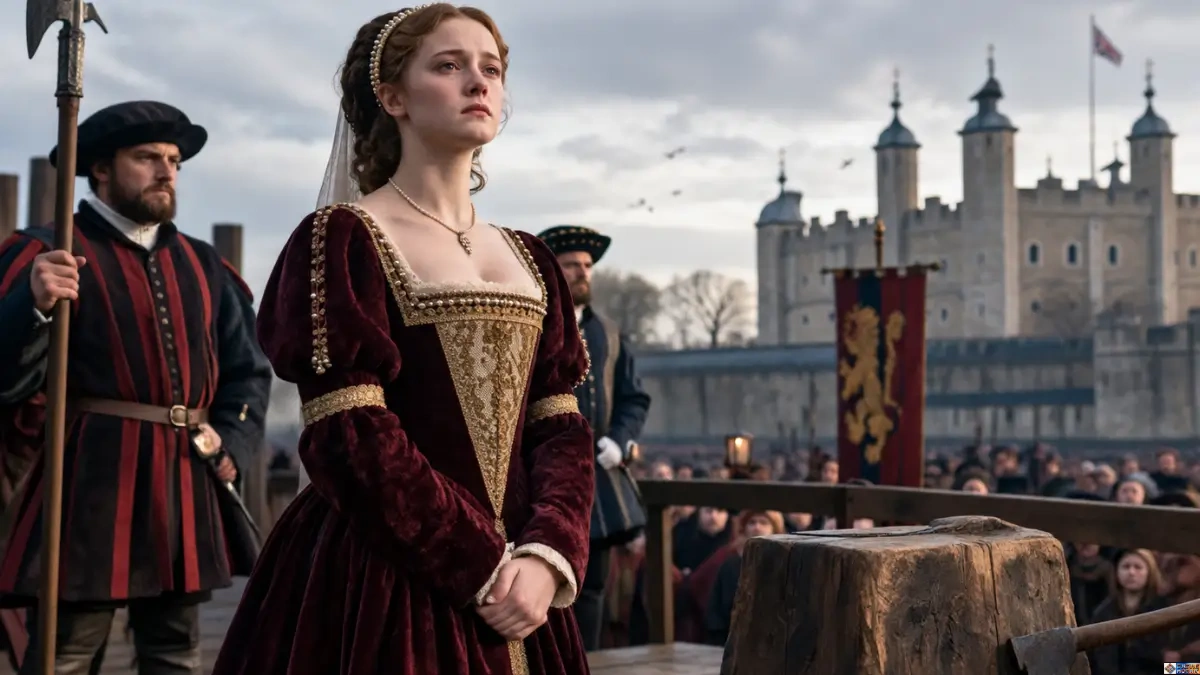
Lady Jane Grey Last Words: Separating Tudor Legend from Primary Source Record
Quick Summary: On the freezing morning of February 12, 1554, sixteen-year-old Lady Jane Grey mounted the scaffold at Tower Green. After declaring her personal innocence and reciting Psalm 51 in English, she was blindfolded, lost her bearings in the pitch darkness, and gasped, “What shall I do? Where is it?” before her execution. Her tragic final moments remain one of the most haunting eyewitness accounts in Tudor history.
On a bitter winter morning inside the Tower of London, a teenage girl dressed in black knelt upon the straw-strewn scaffold. Blindfolded with a white cloth, she reached into the darkness, her hands trembling as she searched for the wooden block that would end her life. Desperate and disoriented, her voice broke the heavy silence: “What shall I do? Where is it?”
For centuries, the tragedy of the “Nine Days’ Queen” has captivated the world. But beyond the famous paintings and romanticized legends, what actually happened on that scaffold? By examining primary eyewitness accounts of Lady Jane Grey Last Words, we reveal the raw, unvarnished history of faith, political betrayal, and a teenager caught in the deadly gears of Tudor succession.
The Scaffold Speech: Faith, Politics, and Personal Innocence
When King Edward VI died in July 1553, the Protestant faction led by John Dudley, Duke of Northumberland, maneuvered the young Lady Jane Grey onto the throne to prevent Edward’s Catholic half-sister, Mary, from taking power. Jane’s rule lasted just nine days before popular support swept Mary I into London.
Although Queen Mary initially intended to spare her cousin, Wyatt’s Rebellion in early 1554—a Protestant uprising involving Jane’s father—convinced Mary that as long as Jane lived, she would remain a figurehead for treason.
Turning to the bystanders, Jane delivered a remarkably composed speech recorded by the contemporary chronicler in the Chronicle of Queen Jane and of Two Years of Queen Mary:
“Good people, I am come hither to die, and by a law I am condemned to the same. The fact, indeed, against the Queen’s highness was unlawful, and the consenting thereunto by me: but touching the procurement and desire thereof by me or on my behalf, I do wash my hands thereof in innocency, before God, and the face of you, good Christian people, this day.”
Jane carefully separated her legal guilt from her moral intent. She admitted to breaking the law by wearing the crown, but maintained that she had been forced into the role by her father and the Duke of Northumberland, alongside her husband, Lord Guildford Dudley.
The Blindfold Moment and Execution
After her speech, Jane handed her gloves and handkerchief to her lady-in-waiting, Mistress Ellen. The executioner knelt and asked for her forgiveness, which she freely gave.
February 12, 1554: Execution Timeline
   ├── 10:00 AM: Lord Guildford Dudley executed on Tower Hill
   ├── 10:30 AM: Jane mounts the scaffold on Tower Green
   ├── Delivers public speech & recites Psalm 51 in English
   ├── Executioner kneels: "I pray you dispatch me quickly"
   ├── Ties blindfold & gropes in dark: "What shall I do? Where is it?"
   └── FINAL WORDS: "Lord, into thy hands I commend my spirit."
He instructed her to stand upon the straw. There, she tied a white cloth over her eyes. In the sudden darkness, she lost her spatial awareness and could not find the wooden block. Reaching out with her hands, panicking slightly in her blindness, she cried out:
“What shall I do? Where is it?”
The crowd stood frozen, bound by protocol that forbade touching the condemned once blindfolded. Finally, an onlooker stepped forward and guided her hands down to the block. Laying her head down, she stretched out her arms and uttered her absolute final words:
“Lord, into thy hands I commend my spirit.”
With a single strike of the axe, the sixteen-year-old former queen was dead.
Scaffold Speeches Compared: Jane Grey vs. Anne Boleyn
The tragic end of Lady Jane Grey invites immediate historical comparison to another famous Tudor trial and execution recorded in Anne Boleyn Six A Glimpse into History.
Both women were highly educated, fiercely Protestant, and victims of royal factionalism. However, their final words reflected very different political circumstances:
- Anne Boleyn (1536): Spoke with extreme diplomatic caution to protect her young daughter, Elizabeth. She praised King Henry VIII as a “gentle and sovereign lord” to ensure her daughter was not further disinherited.
- Lady Jane Grey (1554): Spoke directly about her conviction. With no living children to protect, she openly defended her personal innocence while acknowledging the legal authority of Queen Mary I.
Such tragic royal events reflect broader historical shifts explored across Culture Mosaic. The political ruthlessness of the Tudor court stands alongside other fascinating historical anomalies like What Is the Dancing Plague of 1518, while romanticized myths about royal courtships contrast with actual accounts in Most Famous Historical Couples and Famous Historical Love Stories and Romances. Even the mythology surrounding famous paintings—like Paul Delaroche’s The Execution of Lady Jane Grey—mirrors the enduring cultural misnomers analyzed in Victorian Wedding Traditions and Myths and ancient mythic questions like Are Greek Gods Real?.
What were Lady Jane Grey’s last words? +
After being blindfolded, Lady Jane Grey could not find the execution block and cried out, “What shall I do? Where is it?” Once an onlooker guided her hands to the block, her final words were, “Lord, into thy hands I commend my spirit.”
Why was Lady Jane Grey accused of treason? +
She was convicted of treason for accepting the crown under Edward VI’s device for the succession, which bypassed Mary Tudor. Although Queen Mary I initially hesitated to execute her, Wyatt’s Rebellion in early 1554 forced Mary’s hand.
How old was Lady Jane Grey when she died? +
Lady Jane Grey was only 16 or 17 years old at the time of her execution on February 12, 1554.
Did Lady Jane Grey have a child? +
No, she did not have any children. Her marriage to Lord Guildford Dudley lasted less than a year before their imprisonment and subsequent executions.
Who ordered the death of Lady Jane Grey? +
Queen Mary I signed the execution warrant under political pressure from her advisors and the Spanish ambassador, who warned that Mary’s upcoming marriage to Philip II of Spain would not be secure with Jane alive.
Credible Historical Sources & Academic References
- Nichols, John Gough (Ed.). The Chronicle of Queen Jane, and of Two Years of Queen Mary. Camden Society, 1850 (Primary Source).
- Ives, Eric. Lady Jane Grey: A Tudor Mystery. Wiley-Blackwell, 2009.
- Tallis, Nicola. Crown of Blood: The Rise and Fall of Lady Jane Grey. Michael O’Mara Books, 2016.
- Historic Royal Palaces. “Lady Jane Grey,” Tower of London Historical Records Archives, 2023.
 Dr. Marcus Hale