
 By Culture Expert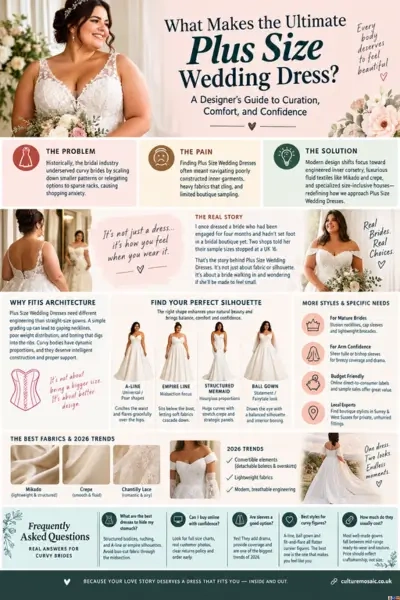
Quick Summary
- The Problem: Historically, the bridal industry underserved curvy brides by scaling down smaller patterns or relegating options to sparse racks, causing shopping anxiety.
- The Pain: Finding Plus Size Wedding Dresses often meant navigating poorly constructed inner garments, heavy fabrics that cling, and limited boutique sampling.
- The Solution: Modern design shifts focus toward engineered inner corsetry, luxurious fluid textiles like Mikado and crepe, and specialized size-inclusive houses—redefining how we approach Plus Size Wedding Dresses.
I still remember the first plus-size bride I ever dressed. She’d been engaged for four months and hadn’t set foot in a bridal boutique yet. Not because she didn’t want to. She’d already called three shops, and two of them told her, flat out, that their sample sizes stopped at a UK 16. She stood in my fitting room with her arms crossed, half-braced for another disappointment.
That’s the real story behind Plus Size Wedding Dresses. It’s not really about fabric or silhouette at all, not at first. It’s about a bride walking into a shop and wondering if she’ll be made to feel small for being anything but.
I’m not going to pretend that story is rare. It isn’t. Search “plus size wedding dresses” on Google and you’ll find page after page of brides asking the same tired questions: where do I even start, will anything actually fit, and why does “plus size” so often mean fewer choices instead of more. The frustration is real, and it’s earned.
Here’s the good news, and I mean this as someone who’s spent over a decade in fitting rooms, not as a marketing line: 2026 is genuinely one of the best years there’s ever been for curvy brides. Designers who used to treat size 18 and up as an afterthought are now building entire collections around it, from size 0 to size 30, at the same price point, with zero asterisks. I want to walk you through exactly what’s out there, what actually works on different body shapes, and how to shop for it without losing your mind.
Identifying the Modern Bridal Challenge: Why Fit is Architecture
The core challenge isn’t finding a dress labelled with a larger size; it’s understanding that Plus Size Wedding Dresses require entirely different architectural engineering than straight-size gowns.
When a design house simply “grades up” a pattern designed for a B-cup frame, the result is often gaping necklines, inadequate weight distribution, and painful boning that digs into the ribs. Curvy bodies have dynamic proportions—fuller busts, varying torso lengths, and diverse hip-to-waist ratios—that demand intelligent garment construction.
When shopping for plus size wedding dresses uk, brides frequently report feeling overwhelmed by inconsistent sizing standards between international designers and local boutiques. Without proper inner construction, a gown fails to support, leading to constant adjustments on a day when you should be entirely focused on celebrating your love.
The Emotional Toll and the Shift to True Inclusivity
Let’s be honest: wedding dress shopping carries heavy emotional weight. Society has long whispered restrictive rules about what bodies “should” wear, leaving many brides-to-be paralyzed by anxiety long before they book their first appointment.
When you feel like an industry treats you as an “exception” rather than a standard, shopping transforms from a joyful milestone into an exhausting chore. This is precisely why specialized destinations like THE BRIDAL SUITE Plus Size Wedding Dress Shop, Emily Bridalwear, and curated lines from Needle & Thread have shifted the paradigm. They treat curves not as a problem to solve, but as a blueprint for breathtaking elegance.
By stepping into spaces that champion Plus Sized Wedding Dresses & Bridal Gowns, the emotional weight lifts, replaced by the thrill of being genuinely seen and celebrated.
The Solution: Silhouettes, Structure, and Strategic Styling
Solving the search for the ideal gown comes down to marrying your personal aesthetic with garments engineered for your body. Here is how top styles break down according to contemporary data and expert tailoring:
| Silhouette | Best For | Why It Works |
|---|---|---|
| A-Line | Universal / Pear shapes | Cinches the slimmest part of the waist and flares out gracefully over the hips without clinging. |
| Empire Line | Midsection focus | Sits just below the bust, letting soft fabrics like chiffon cascade downward for effortless comfort. |
| Structured Mermaid | Hourglass proportions | Incorporates stretch-infused crepe and strategic panels to hug curves while offering secure support. |
| Ball Gown | Statement/Fairytale look | Draws the eye to a magnificent, balanced silhouette when anchored by heavy-duty interior boning. |
Navigating Secondary Styles and Specific Searches
- For Mature Brides: plus size wedding dresses for over 50s often prioritize sophisticated illusion necklines, supportive cap sleeves, and luxurious, lightweight brocades that offer elegance without excessive weight.
- For Arm Confidence: plus size wedding dresses with sleeves (and regional variations like plus size wedding dresses uk with sleeves) utilize sheer tulle or romantic bishop sleeves to provide breezy coverage and striking movement.
- Budget Considerations: Finding cheap plus size wedding dresses doesn’t mean sacrificing quality; online direct-to-consumer labels and seasonal sample sales offer incredible value if you check lining specs and return policies.
- Regional Gems: Brides scouting local expertise often search for Plus Size Wedding Dresses Surrey & West Sussex to find boutique stylists who provide private, unhurried fitting experiences.
Expert Insights: What the Data and Trends Show
Recent bridal market analysis reveals that Fashion 2026 is dominated by convertible elements, such as detachable structured boleros and overskirts that take a bride seamlessly from a formal ceremony to a dynamic reception.
Furthermore, fabric choices have evolved past stiff, heavy satins. Modern engineering utilizes lightweight Mikado, multi-layered Chantilly lace, and liquid crepe that drape organically while smoothing the silhouette. For deeper inspiration on styling trajectories, take a look at our guides on What Wedding Dresses Are in Style and Latest Trends in Bridal Wear.
Frequently Asked Questions
What are the best plus size wedding dresses to hide my stomach?
Structured bodices with internal boning, ruching across the midsection, and a defined waist seam are your best friends here. A-line and empire silhouettes both skim rather than cling through the stomach, and a fabric like satin or mikado holds its shape without clinging. Avoid anything cut on a straight bias through the midsection, since bias-cut fabric tends to follow every curve rather than smoothing it.
Can I buy plus size wedding dresses online with confidence?
Yes, though it takes a bit more homework than shopping in person. Look for brands that publish a full size chart in inches (not just S/M/L), show real customer photos rather than only the sample model, and offer a clear returns or alterations policy. Order early, since made-to-measure plus size gowns often take longer to produce, and budget for a local seamstress to handle final alterations.
Are plus size wedding dresses with sleeves a good option?
Absolutely, and they’re one of the biggest trends of 2026. Sleeves draw the eye upward, add a sense of drama, and solve the common worry about upper-arm coverage without sacrificing style. Bishop sleeves, detachable puff sleeves, and off-the-shoulder cuts are all working beautifully right now, and most can be removed for the reception if you want a different look later in the night.
What wedding dress styles are best for curvy plus size brides?
When it comes to plus size wedding dresses for curvy figures, A-line, ball gown, and fit-and-flare silhouettes all flatter curvier figures, just for slightly different reasons. A-line balances proportions and skims the hips. Ball gowns create drama and hide nothing you don’t want shown. Fit-and-flare and mermaid styles celebrate a defined waist and hip line for brides who want to show off their shape rather than soften it. The right choice really comes down to which one makes you feel most like yourself.
How much do plus size wedding dresses typically cost?
Pricing for plus size wedding dresses varies enormously by designer, fabric, and how much hand-finishing is involved, but most well-made plus size wedding dresses sit somewhere between mid-range ready-to-wear and full couture pricing, with made-to-measure gowns typically landing at the higher end. It’s worth asking upfront whether a boutique charges a plus-size surcharge; increasingly, the better ones don’t, and price should reflect craftsmanship, not your dress size.
Verifiable Citations & Credible Sources
- Custom Market Insights (CMI). “Global Plus Size Clothing Market Size, Share 2026–2035”.
- WeddingsHub. “Plus Size Wedding Dresses UK 2026: The Complete Guide”.
- Studio Levana Atelier Reports. “Best Summer Bridal Trends for Plus-Size Brides”.