
 By Culture Expert
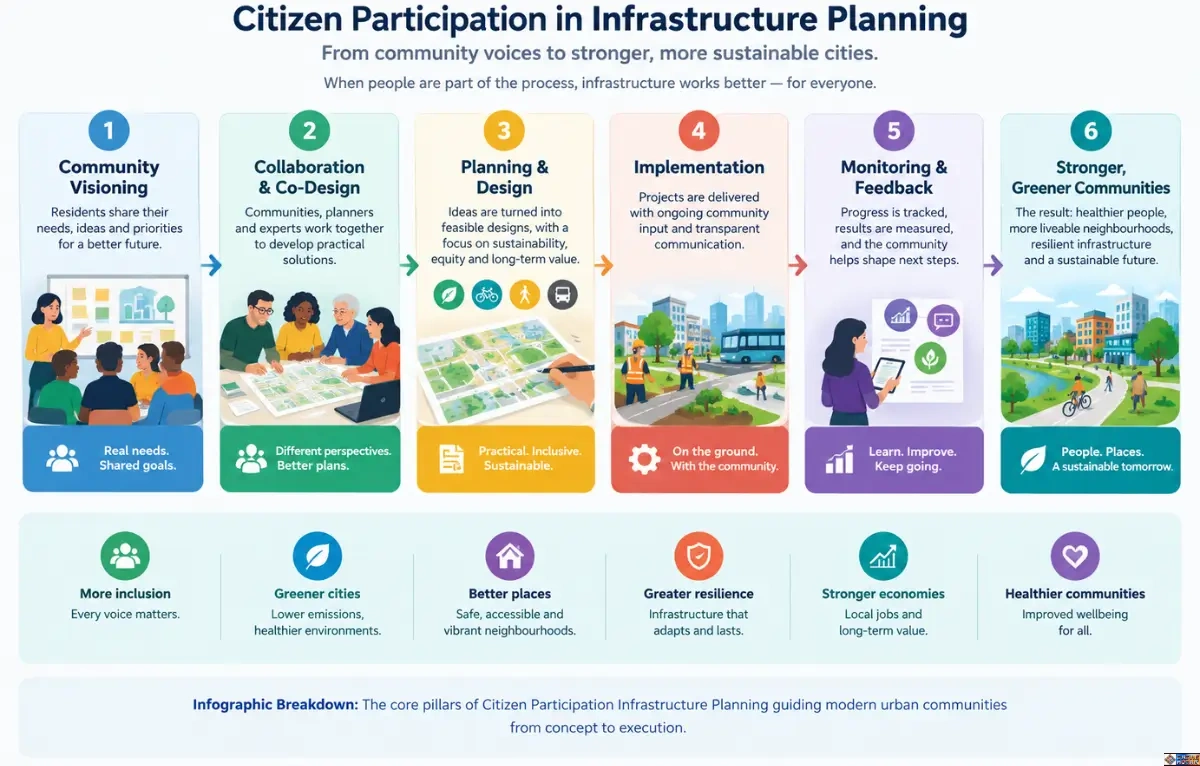
Infrastructure planning used to happen behind closed doors, where engineers and politicians made top-down decisions that reshaped entire neighborhoods without local input. Today, that narrative is shifting. Residents are stepping up at public hearings, submitting digital feedback, and organizing locally to influence everything from neighborhood transit routes to resilient green spaces.
At its core, citizen participation infrastructure planning is the vital process through which everyday people contribute to decisions regarding public works—ranging from roads, bridges, and public transportation systems to water infrastructure, energy networks, parks, and stormwater management facilities.
i Quick Summary (Answer Block)
- What it is: The active involvement of community members in designing, funding, and implementing public infrastructure projects.
- Why it matters: It shifts projects away from purely technical or political convenience, ensuring developments align with real neighborhood needs, boost equity, and foster sustainable growth.
- Key milestones: Environmental reviews, preliminary design workshops, and capital improvement plan hearings offer the most effective windows for meaningful influence.
The Problem: Top-Down Planning and Disconnected Communities
For decades, urban development followed a rigid blueprint. Major decisions were finalized long before the public ever saw a blueprint or rendering. Highways were pushed through vibrant neighborhoods, transit systems ignored marginalized zip codes, and massive stormwater tunnels were built without consulting residents who lived on flood-prone streets.
This traditional model treats residents as passive recipients of municipal engineering rather than active co-creators of their built environment. When communities are excluded from the foundational stages of development, the resulting infrastructure often fails to solve local problems, deepens spatial inequality, and triggers deep-seated public frustration.
If you have ever stared at a newly paved street that completely ignored pedestrian safety or watched a transit expansion bypass your neighborhood while adding congestion, you know the exact friction caused by a lack of genuine public input.
Moving Beyond Symbolic Gestures: The Citizen Participation Infrastructure Planning Framework
Not all public engagement is created equal. Many municipalities mistake a rubber-stamp public hearing for true community involvement. Understanding the spectrum of engagement helps distinguish between empty optics and genuine influence:
- Symbolic Participation: Holding a public meeting only after every major engineering and financial decision has already been locked in. Officials present finished blueprints, take notes, and proceed exactly as planned.
- Meaningful Influence: Engaging residents during the early brainstorming and preliminary design phases, when community feedback can genuinely alter project trajectories, shift routes, or redesign streetscapes.
To implement an effective citizen participation infrastructure planning framework, cities and community groups look to established global models, such as the oecd guidelines for citizen participation processes, which outline how structured public governance reviews and civic involvement can bridge the gap between technical experts and local residents.
| Stage of Planning | Traditional Top-Down Approach | Collaborative Citizen Participation Framework |
|---|---|---|
| Initial Visioning | Decided entirely by agency engineers | Community workshops, visioning boards, and local surveys |
| Design & Routing | Drafted behind closed doors | Participatory mapping and co-design sessions |
| Budget Allocation | Fixed capital improvement schedules | Participatory budgeting and priority hearings |
Critical Decision Points in the Planning Process
Timing is everything. Showing up when concrete is already being poured yields very little influence. To make your voice count, target these critical windows:
- Environmental Impact Assessments: Federally and locally funded projects require environmental reviews. Public comment windows offer a legally mandated opportunity to raise concerns about air quality, noise pollution, and ecological preservation.
- Preliminary Design Workshops: This is where engineers test initial sketches. Participating here allows you to advocate for elements like protected bike lanes, wider sidewalks, and accessible crosswalks.
- Capital Improvement Hearings: Municipalities draft multi-year spending plans. Public hearings on these budgets dictate whether your neighborhood receives funding for sidewalks, lighting, or park renovations.
For a deeper dive into how grassroots organizing intersects with municipal policy, explore how How Public Feedback Shapes Local Policy and Why Public Consultation Is Important shape modern towns.
The Green Infrastructure Revolution and 15-Minute Cities
As climate change and sustainability demands reshape urban landscapes, citizen participation infrastructure planning has expanded far beyond traditional concrete and asphalt. Communities are actively driving the transition toward sustainable models like the What is a 15-minute city concept explanation, where daily essentials sit within a short walk or cycle from home.
- Renewable Energy Integration: Residents are successfully organizing to demand localized solar microgrids and community-owned wind initiatives, shifting power away from centralized fossil-fuel utilities.
- Green Stormwater Management: Instead of relying entirely on massive underground pipes, communities are championing rain gardens, bioswales, and permeable pavements inspired by grassroots environmental movements.
- Complete Streets & Active Mobility: Neighborhood advocates leverage tools like Tactical Urbanism in Community Civic Engagement and Micro-Civic Interventions to test temporary traffic calming measures, proving the viability of pedestrian-first spaces before permanent construction begins.
Modern Tools and Strategies for Effective Engagement
Modern civic participation relies on more than just traditional evening town hall meetings, which often exclude working parents, shift workers, and caregivers. Today’s advocates utilize powerful digital and grassroots toolkits:
- Digital Deliberation Platforms: Interactive online mapping and visualization tools allow residents to drop pins on neighborhood problem areas or design ideal street layouts. Learn more about leveraging these resources through digital civic engagement urban planning and Hyperlocal Digital Deliberation.
- Participatory Budgeting: Allowing residents to vote directly on how a portion of local capital improvement funds gets spent ensures that grassroots priorities receive direct financing.
- Co-Design Initiatives: Bringing residents, designers, and municipal planners together into collaborative workshops transforms adversarial public hearings into creative problem-solving sessions. Discover more insights on this collaborative approach in Co-design in urban planning and civic engagement.
Whether you are looking to launch a local campaign or tap into existing resources, guides such as the Community Advocacy Toolkit and civic participation tools offer practical steps to scale local impact.
Real-World Examples and Success Stories
Across the globe, projects transformed by sustained citizen participation prove that community-led design works:
- The High Line (New York City): A grass-roots community organization rescued an abandoned elevated rail line from demolition, transforming it into an internationally celebrated public greenway through relentless civic advocacy.
- The Embarcadero (San Francisco): Following the 1989 earthquake, local residents successfully pushed to tear down a damaged elevated freeway and replace it with a pedestrian-friendly boulevard, improving traffic flow while reconnecting the city to its waterfront.
For ongoing movements and modern initiatives shaping the current landscape, explore the 2026 Civic Agency Movement and stay connected with broader platforms like Culture mosaic.
Frequently Asked Questions
1. What is citizen participation infrastructure planning? +
It is the collaborative process through which residents influence decisions regarding public works projects (such as transit, parks, roads, and utilities) to ensure developments reflect community needs rather than just top-down engineering priorities.
2. When is the best time to get involved in an infrastructure project? +
The earlier, the better. Engaging during the preliminary visioning, environmental review, and early design phases provides the maximum opportunity to shape project outcomes before budgets and blueprints are finalized.
3. How can I participate if I cannot attend evening city council meetings? +
You can engage asynchronously by submitting written testimony during public comment windows, utilizing online mapping and survey tools provided by municipal agencies, participating in virtual meetings, or joining local advocacy groups that represent your interests.
4. What types of projects can citizens influence? +
Citizens can influence virtually any public development, including complete streets initiatives, public transit expansions, bike networks, neighborhood parks, stormwater management systems, and renewable energy installations.
5. How do I make sure my community input actually makes a difference? +
To maximize your impact, engage early, organize with neighbors to build a collective voice, learn basic planning terminology, offer concrete and constructive alternatives rather than simple complaints, and submit formal written comments for the official public record.
 Marcus J. Holloway